Operations | Monitoring | ITSM | DevOps | Cloud

What is Docker Swarm and How Does it Work?

For most organizations, having a stable and reliable IT infrastructure is essential for success. But managing multiple servers, databases, and applications can often be difficult and time-consuming. Container orchestration is a standard solution for handling this complexity. Docker Swarm has gained popularity as a container orchestration solution because of its simplicity and scalability.

How using a database monitoring tool helps DBAs create value for the whole organization

As the size and complexity of database estates increases, with more workloads and data being hosted on more platforms, both on-premises and in the cloud, so the appeal of third-party database monitoring tools has also grown. Their ability to provide a holistic view of an entire estate and monitor multiple databases and platforms from a single dashboard has been shown to save DBAs and IT teams many hours of time when compared to home-grown solutions.

IoT Dashboards with Grafana and Prometheus

The Internet of Things (IoT) - is a number of physical devices connected to one network that enables the system to interact with the external world. A great deal of the work surrounding IoT is monitoring, as it’s impossible to react without knowing the situation. For example, we might build a greenhouse system for agriculture that can maintain optimal conditions for growing crops. For this purpose, we need to have sensors picking up information about the temperature and humidity.

Integrating BindPlane Into Your Splunk Environment Part 2

Often it can be a challenge to collect data into a monitoring environment that does not natively support that data source. Bindplane can help solve this problem. As the Bindplane Agent is based on OpenTelemetry (and is also as freeform as possible), one can bring in data from disparate sources that are not easily supported by the Splunk Universal Forwarder.

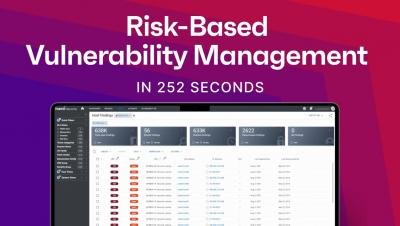
Micro Product Demo: Ivanti Neurons for RBVM & ASOC in 252 seconds

With Ivanti Neurons for Risk-Based Vulnerability Management (RBVM) and App Security Orchestration & Correlation (ASOC), you can move from detection of vulnerabilities and weaknesses to remediation in minutes — not months. As shown in this video from Ivanti, these offerings deliver a contextualized, risk-based view of your organization’s cybersecurity posture. They work by continuously correlating your infrastructure and applications with data ingested from scanners, threat intelligence, human pen test findings and business asset criticality to measure risk and prioritize remediation activities.

Don't Drown in Your Data - Why you don't need a Data Lake

As a leader in Security Analytics, we at Elastic are often asked for our recommendations for architectures for long-term data analysis. And more often than not, the concept of Limitless Data is a novel idea. Other security analytics vendors, struggling to support long-term data retention and analysis, are perpetuating a myth that organizations have no option but to deploy a slow and unwieldy data lake (or swamp) to store data for long periods of time. Let’s bust this myth.

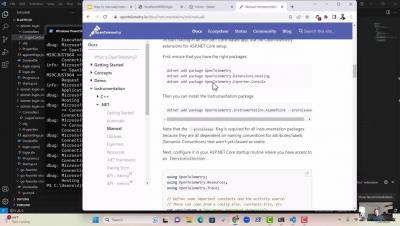
How to Manually Instrument .NET Applications with OpenTelemetry

Welcome to our deep-dive tutorial on manually instrumenting.NET applications with OpenTelemetry! In this comprehensive guide, we walk you through the process of adding OpenTelemetry to your.NET applications to help you better understand and optimize their performance. Whether you're an experienced.NET developer or just getting started, you'll find actionable insights and tips to improve your application monitoring and tracing capabilities.

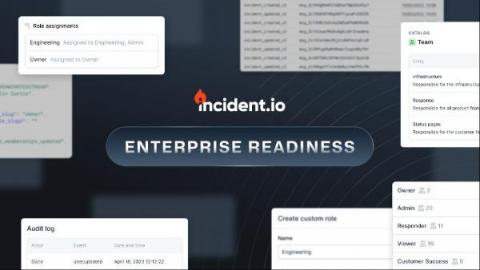
incident.io: A scalable incident management solution built for enterprises

For enterprise businesses, a lot is riding on the efficiency of their incident response. These organizations have large customer bases, complex products, and many incidents. They also have loads of incident responders across various roles, making it difficult to coordinate internally.