Operations | Monitoring | ITSM | DevOps | Cloud

AI in Software Delivery: Engineering Excellence or Just Market Hype? | Harness Blog

AWS re:Invent 2025 made one thing very clear: enterprise interest in AI is no longer theoretical. The conversation has moved beyond curiosity. Teams are actively experimenting, leaders are looking for production-ready use cases, and engineering organizations are trying to figure out where AI can create real leverage across software delivery, security, platform engineering, and operations.

Accelerating MTTR with Faster Root Cause Diagnosis: AI Advisor Now Supports On-Demand Connectivity, Config Context, and Device Diagnostics

Knowing something is broken is easy. Figuring out why is hard. Introducing three new, native AI diagnostic capabilities in the Kentik Network Intelligence Platform to accelerate root cause analysis and keep your network running better.

How AI Is Changing the Way Images Are Created

For most of modern history, creating images required skill, time, and specialized tools. Whether it was photography, illustration, or graphic design, the barrier to entry was clear: you had to learn the craft. AI image generation is changing that dynamic, and the shift is happening faster than many people expected. Today, anyone can describe an idea in plain language and receive a detailed visual in seconds. That alone has reshaped expectations around creativity, productivity, and ownership. But the real impact of AI image generation goes deeper than convenience.

Build with Claude Code, Deploy with Qovery

AI coding tools eliminated the 'writing code' bottleneck. But deploying that code? Still a mess. Here's how Claude Code + Qovery Skill lets you go from idea to production in a single prompt - with enterprise-grade guardrails. Romaric founded Qovery to make Kubernetes accessible to every engineering team. He writes about platform strategy, developer experience, and the future of cloud infrastructure.

Resolve Webinar: Introducing AgentLab: The Foundation of the Autonomous Service Desk

Most service desks still operate across fragmented systems. A single ticket can touch 4–7 tools, often more, slowing resolution and increasing cost. Copilots suggest. Traditional automation executes fixed paths. Neither closes the loop. AgentLab changes that. In this webinar, we introduce a new model built on agentic AI and orchestration. One where AI agents don’t just assist. They act, adapt, and resolve.

Google Cloud Next '26 Recap: AI, Efficiency, and the Rise of Frictionless Delivery | Harness Blog

‍Summary: Google Cloud Next ’26 focused on the future of software delivery, emphasizing that AI, platform consolidation, and an urgent push toward efficiency are reshaping the Software Development Life Cycle (SDLC). The key takeaway from the event was that organizations are moving from AI experimentation to operationalization, actively consolidating fragmented tools onto end-to-end platforms that embed AI for control, intelligence, and speed. ‍

Shadow IT Is Back - And Vibe Coding Made It 10x Worse

AI coding tools are the new Shadow IT - but instead of rogue Trello boards, they have OAuth access to your code repos, cloud accounts, and production databases. Here's what's already gone wrong, and how platform engineering fixes it. Romaric founded Qovery to make Kubernetes accessible to every engineering team. He writes about platform strategy, developer experience, and the future of cloud infrastructure.

Top tips: When "sounds right" isn't right

Top Tips is a weekly column where we highlight what’s trending in the tech world today and list ways to explore these trends. This week, we’re looking at why convincing AI answers can still be wrong and how to catch them before they slip through. AI doesn’t fail the way it used to. It doesn’t give obviously wrong answers. It gives answers that are just right enough to trust. And that’s exactly why we stop questioning it. It fits into our workflow so easily.

DORA Metrics in the AI Era: Why Deployment Isn't Faster

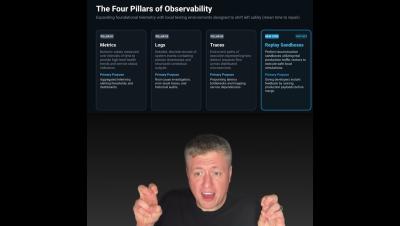
DORA metrics in the AI era reveal a paradox: PR volume is climbing, but deployment frequency is staying flat. In this talk, GitKraken's Director of Product Jeff Schinella breaks down why AI-accelerated code generation is creating a review bottleneck that your DORA metrics can't fully explain on their own. Jeff walks through how PR metrics (cycle time, first response time, code churn, and PR size) serve as the leading indicators behind your DORA data. If your deployment frequency is flat while PR counts go up, the bottleneck isn't your devs. It's your review capacity.