Operations | Monitoring | ITSM | DevOps | Cloud

The latest News and Information on AIOps, alerting in complex systems and related technologies.

The Year in Making - Fabrix.ai 2025: From CloudFabrix to Agentic AI Leadership

Just as NASA’s Artemis II mission represents humanity’s return to the Moon after more than 50 years, marking a pivotal moment in space exploration, Fabrix.ai has embarked on its own transformative journey in 2025. Artemis II—targeted for launch in February 2026 completed its crucial countdown demonstration test in December 2025, symbolizing humanity’s readiness to venture beyond Earth for deep space exploration and eventually return to the lunar surface.

How AIOps Gives IT Teams Their Time (and Sanity) Back!

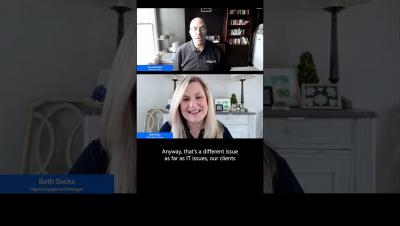
IT teams don’t struggle because they’re unskilled — they struggle because they’re overloaded. Alert fatigue, manual diagnostics, and constant escalations drain time and motivation, even in high-performing IT departments. AIOps changes that dynamic completely. With intelligent automation, repetitive tasks are handled before they even reach your engineers. Instead of firefighting all day, teams finally get the space to focus on strategic problem-solving and innovation. In this video, we break down how AIOps helps IT teams.

What Is An AIOps Platform? AIOps Platform Definition And Deep Dive for 2026

If you’re running a SaaS business today, you’ve probably noticed the alarms never really stop. Logs. Alerts. Tickets. They pile up faster than many teams can triage them. Add multiple clouds, microservices, and AI-driven workloads, and suddenly, your “always-on” infrastructure feels like it’s always on fire. AIOps platforms promise to connect dots that human teams struggle to see fast enough. For engineers, these include surfacing root causes and outwitting outages.

Part 3: What If IT Stopped Reacting to Incidents and Started Predicting Them?

Enterprises are experiencing a turning point. Systems scale faster than teams can, AI is rewriting the rhythms of operations, and the cost of downtime grows heavier every quarter. In this new landscape, reacting is no longer enough. Teams need foresight. They need to get ahead of the issue. They need a different model entirely. This third installment centers on a simple but transformative idea. What if IT operations could finally step out of reaction mode and move into anticipation?

Configuration as Intelligence: The New Operating System of Resilience

Modern IT operations live in constant flux. New tools appear, workloads shift to the cloud, architectures fragment, and every device, application, and user brings its own update rhythm. In this state of constant motion, reliability isn’t a static condition; it’s a dynamic discipline. For years, organizations have relied on observability and monitoring to keep systems running. But those tools only tell half the story.

Gartner I&O and Cloud Strategies Conference 2025: From Observability to Outcome-Driven Operations

This year’s Gartner IT Infrastructure, Operations and Cloud Strategies Conference made one thing abundantly clear: the industry is moving beyond reactive monitoring and isolated dashboards toward autonomous, outcome-driven IT operations. While AI and agentic automation dominated keynotes and vendor messaging, conversations on the show floor reflected a more grounded reality.

Episode 3 - Where AI Meets Legacy Systems

In this episode of The Intelligent Enterprise, host Tom Stoneman gets inside a challenge many enterprises are facing right now: how to integrate AI with complex legacy systems without breaking what already works. This week, Tom sits down with Yael Gómez, Fractional Chief Technology Officer and Chief Information Officer at Pet Madness, and former technology leader at Walgreens Boots Alliance.

Gisual Enters the Stack: Power, AI, and the Next Phase of Observability

ScienceLogic recently partnered with Gisual—a leader in AI power intelligence­—to bring real-time power insight directly into the ScienceLogic AI Platform. On the surface, that might sound like a straightforward integration story. In reality, it signals something much bigger: observability continues to expand well beyond the digital stack, and operators now treat power as a first-class operational signal.