Operations | Monitoring | ITSM | DevOps | Cloud

Getting started with Memory attacks

Memory (or RAM, short for random-access memory) is a critical computing resource that stores temporary data on a system. Memory is a finite resource, and the amount of memory available determines the number and complexity of processes that can run on the system. Running out of RAM can cause significant problems such as system-wide lockups, terminated processes, and increased disk activity. Understanding how and when these issues can happen is vital to creating stable and resilient systems.
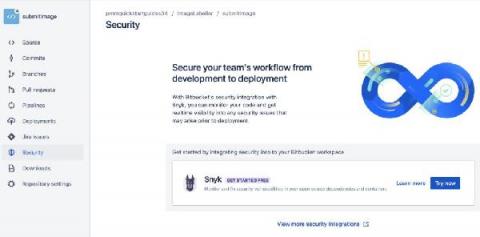
How to integrate security checks into your deployment workflow

As software applications grow in scale and complexity, the surface areas for security vulnerabilities and exploits grow with it. Modern development practices include large amounts of code reuse. First, in the form of language-specific standard libraries such as the C++ STL, the Golang standard library, and Microsoft.NET. Second, in the form of open-source libraries found on places like Github. Much of this code is built using other libraries, introducing a web of dependencies into modern software.

DevSecOps: Collaborate Confidently with Open Source Tools

There is a Cambrian explosion currently underway in the collaboration tools space. The exponential rise in remote working as a result of naturally evolving workplaces and aided by the recent pandemic has created an opportunity for lots of different collaboration tools to take center stage. As our collaboration tools improve, work that would have been nearly impossible to do remotely is becoming more and more common.

Why securing internet-facing applications is challenging in a Kubernetes environment

Internet-facing applications are some of the most targeted workloads by threat actors. Securing this type of application is a must in order to protect your network, but this task is more complex in Kubernetes than in traditional environments, and it poses some challenges. Not only are threats magnified in a Kubernetes environment, but internet-facing applications in Kubernetes are also more vulnerable than their counterparts in traditional environments.

What is Proactive Monitoring?

In the realm of monitoring products, proactive monitoring usually means identifying potential issues within IT infrastructure and applications before users notice and complain and initiating actions to avoid the issue from becoming user noticeable and business impacting. Proactive monitoring means a business is continuously searching for signs that indicate a problem is about to happen.

What to expect from an Icinga Fundamentals training

Let’s set the scene: You just started out with Icinga, maybe because you have realised your need for monitoring or you have inherited an environment. Maybe your boss just decided that this is what you are going to do now. So you are now sitting in front of the documentation, maybe started an installation process. But there are all of those terms that you don’t know, things are looking complicated and you don’t even know where to get started in your journey. And that’s okay!

The Legacy Of Infrastructure As Code: CloudZero Dimensions Transform Cloud Cost

Few practices exemplify the impact of DevOps more than Infrastructure as Code (IaC). Anyone who remembers hearing “I don’t know why it’s not working; it worked on my machine …” can vouch for this! IaC provides a standard way to create declarative descriptions of infrastructure to represent desired environment states — essentially allowing teams to manage IT infrastructure using configuration files.

Elastic 7.15: Create powerful, personalized search experiences in seconds

We are pleased to announce the general availability of Elastic 7.15, a release that brings a broad set of new capabilities to the Elastic Search Platform (including Elasticsearch and Kibana) and its three built-in solutions — Elastic Enterprise Search, Elastic Observability, and Elastic Security.

Divisions of Family Practice Adopts OnPage to Enhance Clinical Communication

Effective healthcare communication requires proper software and processes to ensure that the right person receives timely messages. Unfortunately, Divisions of Family Practice (DoFP), a large community-based network of physicians located in British Columbia, Canada, relied on a third-party answering service to connect long-term care facilities (LTCFs) with on-call providers.