Operations | Monitoring | ITSM | DevOps | Cloud

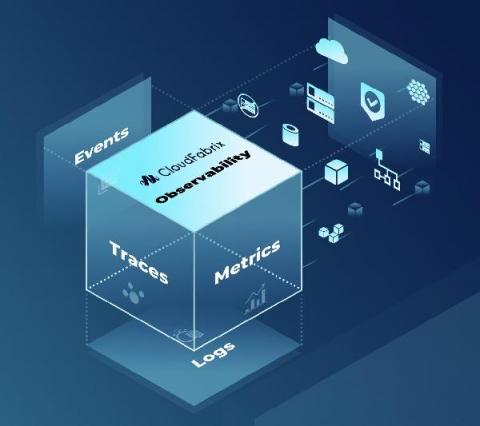
CloudFabrix announces Observability-in-a-Box with Edge AI Capabilities to simplify and accelerate AIOps deployments

CloudFabrix is enhancing its AIOps platform with native Observability and AI at the edge capabilities to bridge the gap between Observability and AIOps solutions. Enterprises are struggling with unifying multitude of expensive monitoring deployments as well as gaps in observability, specifically for modern application architectures that include usage of microservices, containers and Kubernetes.

Introducing Fast, Automated Packet Capture for Kubernetes

If you’re an SRE or on a DevOps team working with Kubernetes and containers, you’ve undoubtedly encountered network connectivity issues with your microservices and workloads. Something is broken and you’re under pressure to fix it, quickly. And so you begin the tedious, manual process of identifying the issue using the observability tools at your disposal…namely metrics and logs.

What Is an IT Service Desk?

Let’s say you’re shopping in a retail store. You have everything on your shopping list except for one item. You’ve browsed through each of the aisles (twice), and you still can’t find what you’re looking for. What do you do? You’ll most likely go to the service desk. There, an associate can direct you to the aisle and shelf of where the item is. This is exactly how the IT service desk works for internal employees throughout an organization.

Top 6 Infrastructure Monitoring Tools

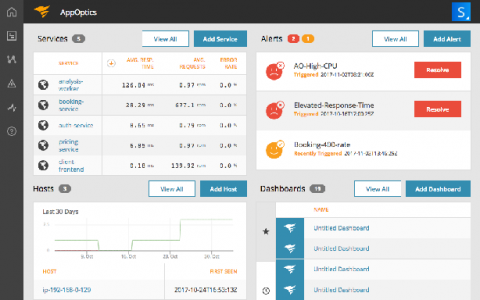
As networked environments continue to become larger, more global, and more distributed, many organizations have higher benchmarks for what they expect from their IT infrastructure. Companies want systems capable of adapting to hardware changes, support machine virtualization, and run applications across disparate data centers. But to ensure these complex IT environments are healthy, companies need infrastructure monitoring tools with visibility into key performance metrics.

Podcast - Building and Monitoring a User-Centric Digital Experience

Recently our CMO, Nik Koutsoukos, and VP Operations, Tony Ferelli, joined Heavy Network on a podcast discussing Digital Experience Monitoring, and how effective monitoring requires a focus on the user experience. Most monitoring tools monitor from the network or application perspective. Now that microservices and multi-cloud environments are commonly used, monitoring is more challenging. The better monitoring approach is being user-centric.

Automation: The Key to Modern IT

Automation is everywhere in our day-to-day IT practices. Many of the processes that have been created for managing hardware and software components were designed, or at least initiated, in a time when managing only a few instances of an application was the norm. When we look at the work required to create, deploy, and maintain applications at a modern scale, the shortcomings of these processes become apparent.

Getting started with Elastic on Google Cloud

Elastic on Google Cloud gives you the power of Elastic Enterprise Search, Elastic Observability, Elastic Security as well as the Elastic Stack so you can quickly and easily search your environment for information, analyze data to observe insights, and protect your technology investments. Elastic Cloud lets you deploy your way, whether as a managed service, or with orchestration tools you manage in your Google Cloud environment.

What is IT Operations Management (and should you prioritize it)?

IT operations management (ITOM) involves the administration of technology applications and components across an enterprise. To effectively manage your IT operations, you must prioritize capacity management, security, availability, and cost-control of all IT infrastructure and assets. Yet, doing so can put a strain on your enterprise. At AlertOps, we offer a major incident management and response platform designed to help your enterprise manage its IT operations.

Shipa Integration with CircleCI

Kubernetes can bring a wide collection of advantages to a development organization. Properly leveraging Kubernetes can greatly improve productivity, empower you to better utilize your cloud spend, improve application stability and reliability, and more. On the flip side, if you are not properly leveraging Kubernetes, your would-be benefits become drawbacks. As a developer, this can become especially frustrating when you are focused on delivering quality code, fast.