Operations | Monitoring | ITSM | DevOps | Cloud

Why Organizations Should Invest in Endpoint Hardening and Automation

Endpoint (or device) hardening is the concept of reinforcing security at the device level. Because securing endpoints is fundamental to every other security action you take, it’s important to invest as much as you can into endpoint hardening. According to research conducted by Ponemon with Keeper Security, 81% of businesses experiencing an attack in 2020 were faced with some form of malware. Other forms of attack also included credential theft, compromised/stolen devices, and account takeover.

Backup as a Service: Overview & Solutions

While the cost of data loss for businesses is currently increasing, Teramind’s data loss statistics show that automated data loss prevention measures help save 3.58 million per breach. Backup as a Service (BaaS) is a service that allows businesses to outsource their data backup to a third party, thus removing the need to backup data at a local workspace. This overview will provide a closer look into BaaS to help you decide if it’s the right choice for your organization.

Webinar Recap: Unlocking Business Performance with Telemetry Data

Telemetry data can provide businesses with valuable insights into how their applications and systems are performing. However, leveraging this data optimally can be a challenge due to data quality issues and limited resources. Our recent webinar, "Unlocking Business Performance with Telemetry Data", addresses this challenge.

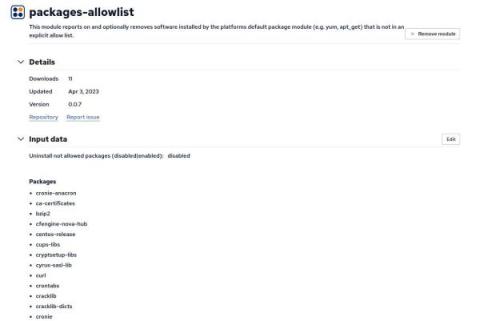
Improved software compliance with packages-allowlist

Having a list of software that is allowed to be installed on a host is a strategy to prevent and fix security gaps and maintain compliance with operational guidelines. This zero-trust methodology ensures that only explicitly permitted applications are allowed to be present on a host unlike package block-listing which enumerates an explicit list of software that is not allowed to be present. In fact, with a software allow-list, you are essentially block-listing everything except the software you allow.

Gain agility through observability

As companies navigate geopolitical challenges, macroeconomic headwinds, and the post-pandemic comedown, business leaders face intense pressure to drive software transformation, reduce costs, and compete faster in the cloud-transition era of “lift and shift.” Amid layoffs and a slowed pace of hiring, the demand for better tools, real-time insights, seamless experiences, and contextual analysis has skyrocketed.

Incident Response Playbook

In today's digital age, IT departments play a crucial role in maintaining the overall functionality and security of an organization. One essential tool for managing service outages and downtime is the incident response playbook. This comprehensive guide provides IT departments with the necessary processes and strategies to resolve incidents in a timely and efficient manner.