Operations | Monitoring | ITSM | DevOps | Cloud

Sponsored Post

What Makes Citrix Difficult for Synthetic Monitoring Solutions?

Synthetic monitoring and automated testing are a major advantage if you can use them. Unfortunately, some challenges stand in the way of running these technologies outside of a web browser. Trying to run synthetic monitoring on Citrix is even more challenging. Thankfully, 2 Steps has identified and solved these issues. In this post, we'll take your through the challenges that running a synthetic monitoring and automated testing solution on Citrix poses and tell you how 2 Steps makes those challenges go away.


Take Stock During Peak Season

It’s that time of the year again and peak season 2022 feels different. With supply chains and global economies in flux, businesses have a lot to consider. Shipping woes are subsiding in many areas – consider that a year ago, the queue at the Port of Long Beach, California was approaching a peak of 110 vessels, down to eight freighters in September of this year. East coast ports in the US and others around the globe are seeing rising tides.

Privacy, Please! Why a Comprehensive Federal Framework is Essential to Protect Consumer Data Privacy

Laws vary by state. That’s expected. Fairbanks, Alaska, enacted a law prohibiting the provision of alcoholic beverages to moose, so don’t even think about it. In a part of Washington State, good luck trying to kill Bigfoot. (Not because Bigfoot doesn’t exist, but specifically because it’s illegal per a 1969 law.) But what happens when state-specific regulations are used to address a topic that transcends geographic boundaries like, say, the internet?

SUSE Rancher and Komodor - Continuous Kubernetes Reliability

With 96% of organizations either using or evaluating Kubernetes and over 7 million developers using Kubernetes around the world, according to a recent CNCF report, it’s safe to say that Kubernetes is eating up the world and has become the de-facto orchestrating system of cloud-native applications. The benefits of adopting K8s are obvious in terms of efficiency, agility, and scalability.

Endpoint Detection & Response (EDR) Guide

Cyberthreats and cyberattacks continue to grow more advanced and complex, making them much harder to stop. In fact, a recent study showed that cybercriminals can penetrate an organization’s network and access network resources in 93 out of 100 cases. The odds of keeping cybercriminals away don’t look hopeful for organizations across all industries.

What's new in Ubuntu Desktop 22.10, Kinetic Kudu

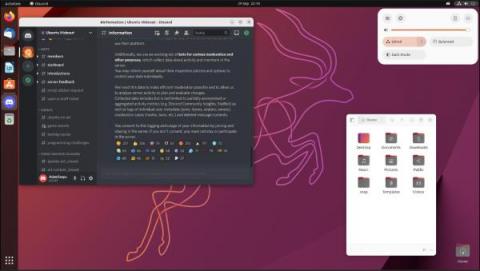
Ubuntu Desktop 22.10, codenamed Kinetic Kudu, is here! This is the first release after Ubuntu 22.04 LTS, which means that there are a number of changes in both the underlying technology and the user experience, as well as some previews of what might be on the horizon in future releases. Excited? Let’s jump straight into our highlights.

Introducing PrivateLink Support for Enterprise

Network topology can get very complicated in the cloud, especially when you’re sending data to external SaaS providers. You will likely need to configure gateways and firewalls and keep close tabs on those points of egress. However, if your infrastructure exists within AWS, there’s a much simpler way and that’s through an AWS PrivateLink endpoint.

Modern IT Infrastructure Management: Three Pillars for Success

Your IT Infrastructure team faces untenable demands on their time and resources as your organization increasingly relies on complex hybrid infrastructures and an ever-growing set of technologies and cloud-based services. You can actually limit visibility and slow triage as you add monitoring tools to cover this expansion, blocking critical insight into your environment at the IT service level. What’s really required to be successful in today’s IT infrastructure environment?

How to monitor systemd service liveness

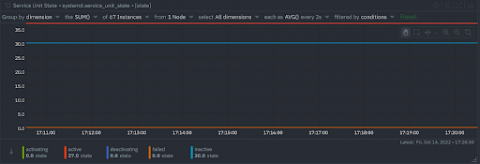
The life of a sysadmin or SRE is often difficult, but occasionally very simple things can make a huge difference. Basic monitoring of your systemd services is one of those simple things, which we sometimes overlook. The simplest question one would want to know is if the thing that’s supposed to be running is actually running at all. If you use systemd services, you can guarantee an answer to that question within minutes using Netdata.

7 types of Redis latency and how to fix it

Redis is designed to be fast. In most cases, it is. However, there are times when Redis may be slow, due to network issues, disk latency, or other factors. When this happens, it is important to be able to detect the slow down and investigate the cause. Latency is the maximum delay between the time a client issues a command and the time the reply to the command is received by the client. Redis has strict requirements on average and worst case latency.