What we've been reading in October
Here are the articles, videos, and tools that we’ve been excited about this October. We hope you enjoy these links, and we look forward to hearing what you’ve been reading in the comments or on the Interrupt Slack.


Here are the articles, videos, and tools that we’ve been excited about this October. We hope you enjoy these links, and we look forward to hearing what you’ve been reading in the comments or on the Interrupt Slack.
In the first part, I outlined some of the terms associated with the delivery of IoT. Next, let’s look at how this gets complex. You will need to read the state of each sensor (through their appropriate API and through their appropriate vendor-supplied hub), create logic to determine what actions must be taken when certain conditions are met, and then deliver these as a workflow to each responder, and confirm through data collected from sensors that the requested change was implemented.
In this blog post, I will be talking about label standard and best practices for Kubernetes security. This is a common area where I see organizations struggle to define the set of labels required to meet their security requirements. My advice is to always start with a hierarchical security design that is capable of achieving your enterprise security and compliance requirements, then define your label standard in alignment with your design.
Today we are announcing an additional $29 million in funding to help Lumigo grow and provide the same powerful observability capabilities we brought to serverless to other cloud-native technologies, including containers and Kubernetes. Lumigo was founded by Aviad Mor and me a few years ago because we believed the world would be rapidly moving to cloud-native architectures and that these technologies are transformative. Our goal was to create the tools that help developers realize this vision.
The best way to be sure that you keep a secret is not to know it in the first place. Managing secrets is a notoriously difficult engineering problem. Across our industry, secrets are stored in a bewildering variety of secure (and sometimes notoriously insecure) systems of varying complexity. Engineers are often trying to balance the least worst set of tradeoffs. At Honeycomb, we asked: What if we didn’t need to know your secrets to begin with?
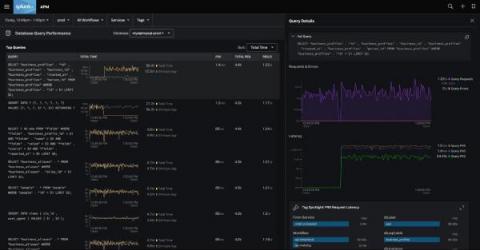
Databases have always been the backbone of applications – both web and enterprise. Now, more than ever before, you need to know not just overall statistics about your database, but you must identify how database performance interacts with the network, operating system, servers, configuration, and even third party dependencies.
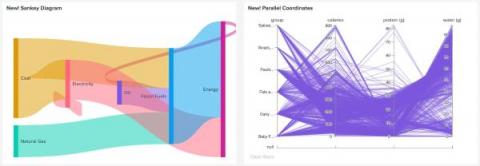
I am very excited that this year’s.conf21was the first.conf where we got to showcase Dashboard Studio, which has come built-in with every Splunk Enterprise and Splunk Cloud Platform release, since 8.2 and 8.1.2103, respectively. I am even more excited to share a packed list of new features in the 8.2.2109 release, which coincides with.conf21! This blog post will highlight a few capability areas we've been heavily focused on that will help you do even more with your dashboards.
In this guide, we are covering the facts that you need to know in order to prepare your business to tick off the necessary boxes required to meet CMMC compliance.
Running a customer contact center to meet the sky-high expectations of today’s customers is hard work. Success depends on having agents who can empathize with and advocate for your customers in order to give them satisfactory answers and resolutions. This is no small task, and the dynamic nature and complexity of all the factors involved make it even more difficult.