Operations | Monitoring | ITSM | DevOps | Cloud

Citrix Monitoring on SCOM | New Management Pack by NiCE & Teqwave

NiCE and Teqwave join forces to enable next-level Citrix monitoring on Microsoft SCOM. Both companies have a long-standing relationship in delivering SCOM-based monitoring services to large-scale enterprises. Our companies are partnering to help Citrix solution owners and administrators providing even better services and end-user experience. The Citrix Management Pack by Teqwave is a proven solution enabling discovery, monitoring, advanced analytics, and reporting on essential Citrix components.

AppSignal Error Tracking 2.0

Today, we’re launching a major upgrade that will improve the way yourteam manages application errors, with more error states, error assignments,severity labels and a “my incidents” overview. Your team’s communication around incidents will improve significantly.You’ll know exactly how severe an error is, who’s responsible, and howyou handled this error historically.

Running Telegraf as Serverless on AWS Lambda for Monitoring Your Cloud

Telegraf is one of the coolest open source agents for collecting metrics. It’s part of the TICK Stack (Telegraf, Influx, Chronograf and Kapacitor) and with Telegraf you can collect metrics from a wide array of inputs and write them into a wide array of outputs. It is plugin-driven for both collection and output of data so it is easily extendable.

How to Run HAProxy with Docker

Can you run HAProxy as a Docker container? Yes! Did you even need to ask? Docker is ubiquitous these days and you’ll find that many applications have been Docker-ized; the HAProxy load balancer is no exception. Pardon the cliché, but HAProxy was born for this. As a standalone service that runs on Linux, porting it to Docker certainly seemed natural. Why would you want to run your load balancer inside of a Docker container? Are their performance penalties when doing so?

It's official! Announcing Runners in Bitbucket Pipelines

You've always been able to execute CI/CD workflows via Bitbucket Pipelines using Atlassian's infrastructure. This is the easiest way to use Bitbucket Pipelines because you don't need to host or manage any servers. We host it and manage it for you. But sometimes you need more control of your hardware, software, and the environment your builds are executed into.

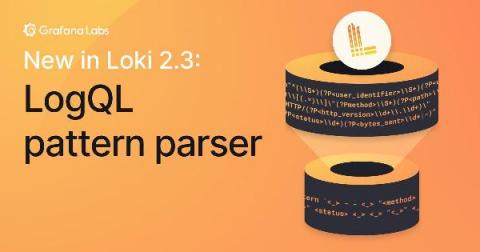
New in Loki 2.3: LogQL pattern parser makes it easier to extract data from unstructured logs

Writing LogQL queries to access Loki’s log data just got easier, thanks to the new pattern parser released with Loki 2.3. It makes writing queries for unstructured log formats simple. And the pattern parser can be an order of magnitude faster than the regular expression parser. Let’s take a closer look.

Use log buckets for data governance, now supported in 23 regions

Logs are an essential part of troubleshooting applications and services. However, ensuring your developers, DevOps, ITOps, and SRE teams have access to the logs they need, while accounting for operational tasks such as scaling up, access control, updates, and keeping your data compliant, can be challenging. To help you offload these operational tasks associated with running your own logging stack, we offer Cloud Logging.

What's Your IT Pro Journey?

Last week, my friend and colleague Leon Adato ( t| b) introduced 2021’s IT Pro Day theme “Bring IT On” and observed an IT pros’ life experiences helped to form the foundation of their skillsets and careers, ultimately preparing them for any challenge thrown their way. Whether it’s a pandemic, natural disaster, or a configuration error that takes down a mission critical server—we know IT pros have it in hand.

Navigating the Artifact Jungle, Where Development Meets Delivery

As developers, we spend most of our time thinking about code: how to design it, write it, debug it, integrate it. Our thoughts are of our source files, our attention is on the repositories and branches that populate our version control system. That’s our job, that’s our world. But to become DevOps professionals, we must think about what happens to take our code to the clusters where it runs. DevOps means taking our applications from development to delivery.