Operations | Monitoring | ITSM | DevOps | Cloud

Kubernetes observability challenges in cloud-native architecture

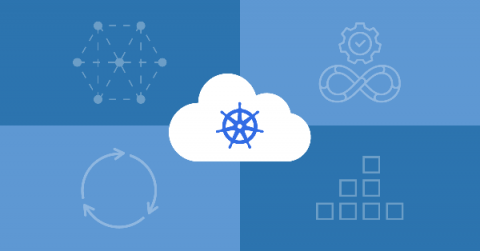
Kubernetes is the de-facto platform for orchestrating containerized workloads and microservices, which are the building blocks of cloud-native applications. Kubernetes workloads are highly dynamic, ephemeral, and are deployed on a distributed and agile infrastructure. Although the benefits of cloud-native applications managed by Kubernetes are plenty, Kubernetes presents a new set of observability challenges in cloud-native applications. Let’s consider some observability challenges.


The Service Desk and Parenthood's Shared Classroom

This past April, my husband and I took on our most exciting and daunting chapter yet: parenthood. Despite the chaos around us, we made the most of our pregnancy and thoroughly enjoyed sifting through baby clothes, putting together his nursery, choosing a name...the works. When it came time to bring our little guy home, I thought we had relatively grounded expectations for what our lives would look like as a family of three.

No Internet? No Problem. Use Artifactory with an Air Gap - Part I

Virtually all development organizations need access to remote public resources such as Maven Central, NuGet Gallery, npmjs.org, Docker Hub etc., to download dependencies needed for a build. One of the big benefits of using Artifactory is its remote repositories which proxy these remote resources and cache artifacts that are downloaded.

CDN Observability - Why You Must Monitor Your Extended Infrastructure

The content delivery network (CDN) has been an integral part of application infrastructure for more than two decades. A CDN is critical to the end-user experience, but it is no longer considered to be just a caching server. It has evolved to provide security from cyber threats, including DDOS attacks along with front end optimization. Although CDN services are now an indispensable part of any application infrastructure, visibility into CDN performance remains limited.

How to Avoid the Executive 'Swoop and Poop' and Other Best Practices for Operational Maturity

We’re eating at restaurants again. We’re seeing family after too long apart. Some of us may even be returning to the office. But, that doesn’t mean that the pressure is off for digital services, and growing in operational maturity still remains top of mind. While the digital transformations have been taking place for the last two decades, COVID-19 added pressure to speed initiatives.

Read active log files more quickly and easily with the new filestream input in Filebeat

With Elastic 7.14, the filestream input, the successor of log input, is now generally available in Filebeat. This new, superior input provides better support for reading active log files, with faster reaction time when there is backpressure in the system, quicker registry updates, better cooperation with external log rotation tools, and more.

Are You Spending Enough on Cybersecurity?

Cybercriminals do not discriminate against the organization, people or industry they target. These actors look to exploit vulnerabilities in resources to intercept valuable data from small and medium-sized businesses (SMBs). Cyberattacks are inevitable, and organizations must have the right controls and information security systems to mitigate the impact of an attack.

Dashbird Explained: the why, what and how

Here’s everything you need to know to get started with Dashbird – the complete solution for End-to-End Infrastructure observability , Real-time Error Tracking, and Well-Architected Insights. When working with AWS, One cannot emphasize enough the architectural best practices for designing workloads. One of those best practices is to design the solution in such a way that the monitoring of infrastructure and troubleshooting of errors and problems is achieved effortlessly.

GitOps Workshop

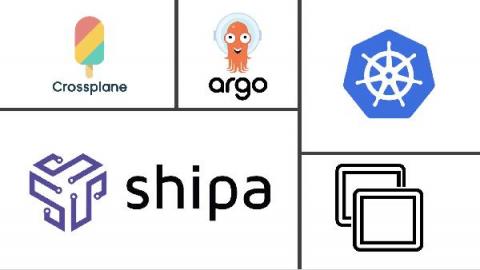
On August 11th, 2021, we conducted a workshop to discuss implementing a GitOps workflow using ArgoCD, Crossplane, and Shipa. We were overwhelmed by the hundreds of people who registered for the session. We believe it shows a few important challenges have to be solved for GitOps to become mainstream across different enterprises. While GitOps brings many benefits, we often see teams facing challenges.

With DX NetOps, Oil Firm Scales Remote Network Access for 60,000 Users

Like many in 2020, executives at this large oil and gas services company made the decision to have most employees work from home and to restrict all nonessential business travel in order to keep their employees safe. The company rose to this challenge at the very outset of the pandemic. A virtual private network (VPN) is the most common and secure way to provide access to company resources and data when employees are traveling or working remotely.