Operations | Monitoring | ITSM | DevOps | Cloud

What is Agile Methodology and How Does it Work?

Software is available everywhere we look. Any machinery we use associates itself with code that controls the way it works. Software teams work to write these applications, and many software developers band together to work on a single project. They keep working on ensuring that the application should work just as designed for the end-user when they deploy the code.
Sysdig and Apolicy join forces to help customers secure Infrastructure As Code and automate remediation

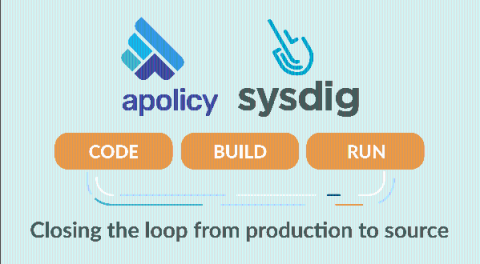
Today, we announced that Sysdig is acquiring Apolicy to enable our customers to secure their infrastructure as code. I could not be more excited because the innovation that Apolicy brings to bear is unique and highly differentiated, allowing customers to strengthen their Kubernetes and cloud security and compliance by leveraging policy as code and automated remediation workflows that close the gap from source to production.

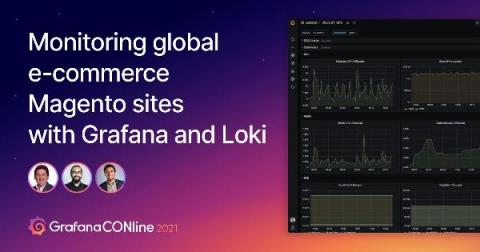
How Pernod Ricard uses Grafana and Loki to scale and monitor its global e-commerce business

Pernod Ricard is the toast of the wine and spirits industry, with a comprehensive portfolio that includes brands such as Jameson, Absolut Vodka, and Havana Club. While the $53 billion company has thrived on traditional distribution channels such as restaurants, clubs, stores, and duty-free shops, Pernod Ricard has recently focused on growing its direct-to-consumer (D2C) e-commerce business.

Observability for Retail: Top 3 Challenges and How Monitoring Can Help

The pandemic has created a unique set of circumstances that have accelerated what was already a growing trend. The shift from brick and mortar retail to a hybrid online and in-person retail experience has meant that nearly every retailer must also be an e-tailer and deliver a flawless digital shopping experience for its customers.

The Ops Agent is now GA and it leverages OpenTelemetry

Running and troubleshooting production services requires deep visibility into your applications and infrastructure. While basic logs and metrics are available out of the box with Google Cloud Compute Engine (GCE), capturing advanced data used to require the installation of both a metrics agent and a logging agent.

Finding Unexpected Development Solutions Through Log Management

This is a personal story from before I worked at observIQ. I am not a technical person in any professional sense. I have no direct training and my coding experience is limited to front-end web design and some indie game development. Before observIQ, all I knew about log management was that it has something to do with tracking computer performance and behavior, and I associated it mostly with DevOps and the cloud. I never imagined it would play any valuable role in my professional endeavors.

M&A-are MSPs the new gold rush?

If you attended our recent virtual Empower event you may have seen the extensive session on mergers and acquisitions. We’ve witnessed a large amount of M&A activity within the MSP space over the past few years as a result of the managed services business model becoming attractive for private equity investment. According to 451 Research’s M&A KnowledgeBase, M&A activity was at an all-time low in 2020, except within the technology sector.

GitLab Client for Linux

Working in a DevOps field, I often find myself needing to deliver a feature or an improvement (basically a piece of code) in a relatively short amount of time, or even working in parallel on different tasks. A rather universal software development stack is comprised of: Repository and branch management in Git has never been easier. Get more control over your Git workflow with the visualization offered by GitKraken.

Migrating Thousands of Cloud Instances to New Kubernetes Custom Resources

Mattermost’s Kubernetes Operator spins up and manages Mattermost instances running on Kubernetes based on a ClusterInstallation Custom Resource (CR). Mattermost Operator 1.0 has evolved a lot since its release, along with the ClusterInstallation CR in the v1alpha version. As time went by — as with any software — the Operator gained more features, configuration options, functionalities, and technical debt.