Operations | Monitoring | ITSM | DevOps | Cloud

The challenges of monitoring a highly complex database estate at the University of the Sunshine Coast

As the manager for enterprise applications and data at the University of the Sunshine Coast in Queensland, Australia, I face a lot of unique challenges. The university itself has around 25,000 students, 1,000 permanent staff and another 1,000 seasonal staff who assist with key academic sessions. They’re spread out across the flagship campus at Sippy Downs and a number of satellite campuses and research and teaching facilities in other locations.
How Does Microservices Architecture Change Database Deployment?

This question was raised at the recent Redgate Summit: How does the implementation of a microservices architecture affect the implementation of a database DevOps approach? I could even rephrase it a little: Does a microservices architecture affect a database DevOps approach?

What is Hardware Asset Management (HAM)? Why is it Important?

Managing hardware assets, manually, from the time they are purchased to the time they are disposed of is a tedious, cumbersome task that is susceptible to many errors. These manual and scattered processes are often inaccurate and difficult to manage. Manual data keeping means that asset information is stored in silos, which raises the overhead expenses, increases the likelihood of asset theft and losses, and makes it hard to comply with the organization’s standards and regulations.

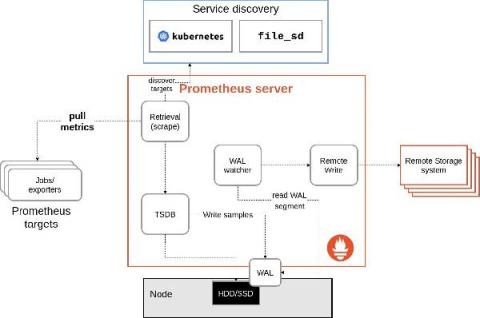
How to troubleshoot remote write issues in Prometheus

Prometheus’s remote write system has a lot of tunable knobs, and in the event of an issue, it can be unclear which ones to adjust. In this post, we’ll discuss some metrics that can help you diagnose remote write issues and decide which configuration parameters you may want to try changing. First, let’s discuss how remote write is implemented. In the past, remote write would duplicate samples coming into Prometheus via scrape.

Announcing OpenSearch: Doubling Down on Open Source

Today, I’m excited to officially announce our support for the OpenSearch project, the new fork of the Elasticsearch and Kibana codebases. As we previously shared, Logz.io has the utmost commitment to its customers and the community to ensure that these open-source technologies will prosper by being built for the community and guided by the community.

What in the world is FinOps, and why do we need it?

In 2020, cloud migration sped up by a factor of 24, according to McKinsey. Would you be surprised to learn there were a lot of factors driving that shift? Due to COVID-19, companies needed to go remote fast and securely. They wanted to lift the maintenance burden off overworked IT teams. And, in the face of the year’s worldwide economic uncertainty, motivation to take advantage of cloud’s cost savings was running high.

A Quick Guide to Developing Steps for Relay

Relay has a substantial library of external services and tools — as of March 2021 there are 60 integrations in our Github organization. Each integration repo can contain multiple triggers, containers that receive webhook payloads from other services, and steps, which Relay executes to get stuff done in your workflow.

Continuous integration that you can trust: announcing SOC 2 certification

At CircleCI, we care about security - in 2018, we became the first CI/CD tool to meet the rigorous security and privacy standards required by government agencies to get FedRAMP authorized. Now, CircleCI is SOC 2 certified, adding another industry-recognized security accreditation.

Slow and Steady: Converting Sentry's Entire Frontend to TypeScript

Recently, Sentry converted 100% of its frontend React codebase from JavaScript to TypeScript. This year-long effort spanned over a dozen members of the engineering team, 1,100 files, and 95,000 lines of code. In this blog post, we share our process, techniques, challenges, and ultimately, what we learned along this journey.