What is Fastly CDN?
In this blog series, we will cover how Fastly and Sumo Logic empower organizations to deliver best-in-class user experience. For the first installment, we take a closer look at Fastly CDN--what it is and how it works.


In this blog series, we will cover how Fastly and Sumo Logic empower organizations to deliver best-in-class user experience. For the first installment, we take a closer look at Fastly CDN--what it is and how it works.
Reporting software is a part of a Business Intelligence or BI suite and is used for analysis in early data processing. The purpose of self-service reporting software is to help deliver interactive information that can be put into action. Self-service reporting software allows the user to connect data sources, extract data and present it in various formats of visualization, including charts, tables, and spreadsheets.
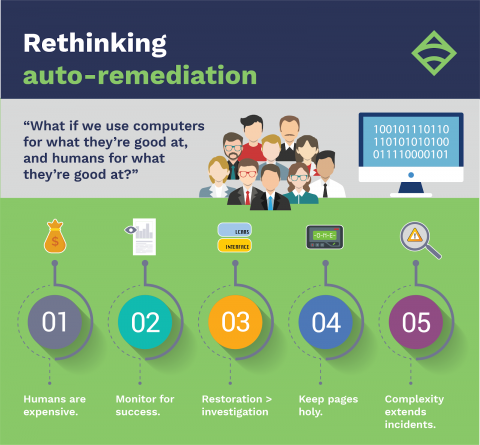
At Monitorama 2018, Engineering Manager Kale Stedman shared Demonware’s journey to assisted remediation, or as he likes to call it: “How my team nearly built an auto-remediation system before we realized we never actually wanted one in the first place.” In this post, I’ll recap Kale’s Monitorama talk, highlighting the key decisions that helped his team reduce daily alerts, fix underlying problems, and establish a more engaged Monitoring Team — including the steps the
COLUMBIA, Md., June 18, 2019 — StatusCast, a leading SaaS provider of Corporate Status Pages, is pleased to announce the successful completion of a Service Organization Controls (SOC) 2 attestation engagement covering the trust principles of Security, Confidentially, and Availability.
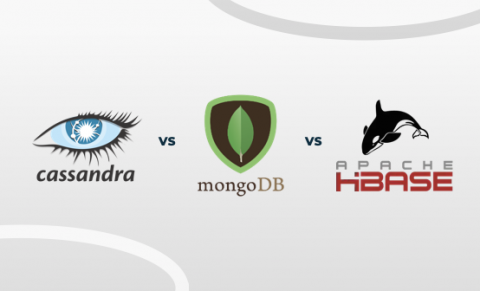
Unlike traditional SQL databases, NoSQL databases, or “non-SQL” databases, do not store their data in tabular relations. Originally designed for modern web-scale databases, they have found widespread use in present-day big data and real-time web applications. Some of the most commonly used data structures include key-value, wide column, graph, and document stores.
Metrics for all – and all for metrics. At Grafana, we not only strive to give people a “single pane of glass” to unify observability metrics. From the very start, our mission has been to advocate for the democratization of metrics, which is the idea that the paradigm needs to shift between who can store data, why they need to store it, and, ultimately, what they’re able to with it. And Grafana users are a great example of how vast and varied the needs are for data access.
After our initial release of Icinga Reporting for early adopters we continued our development and are happy to release v0.9.1 today. The release includes bug fixes and some minor enhancements for the usability. I want to take this opportunity to write a post aimed at the people who are new to the whole reporting shabang – like me. This week I set out to figuring out for myself why one would need to use reporting and how to get there – and to share my new knowledge with you!
AWS CloudWatch Logs gives you full visibility into your AWS infrastructure, from individual workloads to the services that bind them. Monitoring these logs helps ensure their smooth and continued operation, ongoing stability, and performance. Integrating CloudWatch Logs with LogDNA makes it easier to parse, search, and analyze AWS logs in order to detect anomalies and troubleshoot problems faster.
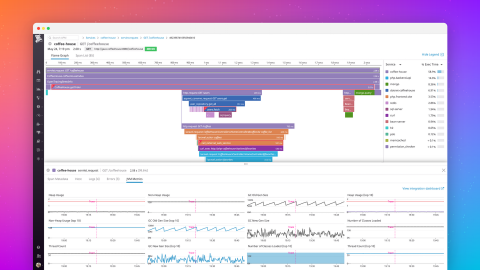
Whether you’re investigating memory leaks or debugging errors, Java Virtual Machine (JVM) runtime metrics provide detailed context for troubleshooting application performance issues. For example, if you see a spike in application latency, correlating request traces with Java runtime metrics can help you determine if the bottleneck is the JVM (e.g., inefficient garbage collection) or a code-level issue.