Operations | Monitoring | ITSM | DevOps | Cloud

Legacy alerting removal: What you need to know about upgrading to Grafana Alerting

Two years ago, when we launched Grafana 9, we announced the deprecation of legacy alerting and introduced Grafana Alerting, the new default alerting system in all editions of Grafana. Since then we have invested in Grafana Alerting, making it easier to create and manage your alerts. Along the way we have also worked to make the transition from legacy alerting to Grafana Alerting as seamless as possible in preparation for the time when we remove legacy alerting altogether from Grafana.
Observing Core Web Vitals with OpenTelemetry: Part Two

Core Web Vitals (CWV) are Google's preferred metrics for measuring the quality of the user experience for browser web apps. Currently, Core Web Vitals measure loading performance, interactivity, and visual stability. These are the main indicators of what a user’s experience will be while using a web page: Note: As of March 12th, INP has become a stable Core Web Vital, replacing First Input Delay (FID).

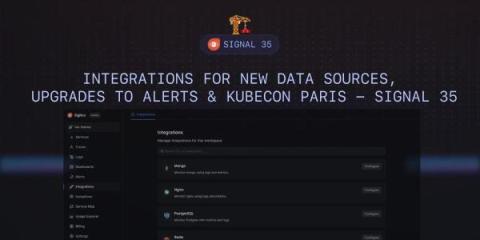
Integrations for new Data Sources, Upgrades to Alerts & Kubecon Paris - SigNal 35

Welcome to the 35th edition of our monthly product newsletter - SigNal 35! We have made significant advancements in enhancing our product. The integration feature we shipped will enable quick-start monitoring for popular technologies in SigNoz. Let’s see what humans of SigNoz were up to in the month of March 2024.

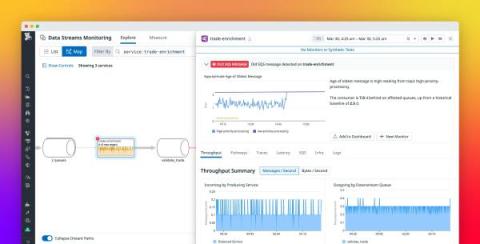
Monitor SQS with Data Streams Monitoring

Datadog Data Streams Monitoring (DSM) provides detailed visibility into your event-driven applications and streaming data pipelines, letting you easily track and improve performance. We’ve covered DSM for Kafka and RabbitMQ users previously on our blog. In this post, we’ll guide you through using DSM to monitor applications built with Amazon Simple Queue Service (SQS).

How to Build a Multidisciplinary ITSM Project

The process of building and maintaining an IT Service Management (ITSM) project looks different for every organization. There is however something that all robust initiatives have in common; they combine and adapt different concepts and frameworks within teams to maximize value and operation maturity. The benefits of this approach are clear. You get to tailor your ITSM project through multiple perspectives that can help achieve different aspects of your goals.

Getting started with the Elastic AI Assistant for Observability and Microsoft Azure OpenAI

Recently, Elastic announced the AI Assistant for Observability is now generally available for all Elastic users. The AI Assistant enables a new tool for Elastic Observability providing large language model (LLM) connected chat and contextual insights to explain errors and suggest remediation.

The egress fee trap: How hyperscalers hurt customers and stifle innovation

Today, at Civo, we announced the complete removal of all egress fees, without caveats. Regardless of whether you stay with Civo, or look to move to another provider. Why have we done this? Our decision to remove egress fees is rooted from the original promise of cloud computing: flexibility and freedom. It embodies the ability to tap into virtually limitless computing resources on demand, without being tethered to rigid, on-premises infrastructure.

Barcodes trends 2024: The Future of Inventory Management

With an increasing emphasis on real-time data and streamlined operations, businesses are constantly seeking innovative solutions to stay ahead. One technology that has been a linchpin for decades and continues to evolve is barcodes. Today, the trends surrounding barcodes are not only enhancing their traditional applications but also redefining the future of inventory management.

Understanding service level agreements (SLAs): The basics

Service Level Agreements, or SLAs, are like business handshakes. They are the promises that companies and service providers make to each other about service quality, like how quickly a website loads or how fast customer service responds. SLAs set clear expectations right from the start, ensuring no surprises along the way and keeping both sides happy.

Harnessing the Power of AI: Removing Objects from Photos with AI Technology

In the realm of digital photography, the ability to manipulate images has become more accessible and sophisticated than ever before, thanks to advancements in Artificial Intelligence (AI) technology. Among the myriad tasks in photo editing, removing unwanted objects from photos stands out as a common challenge faced by photographers and enthusiasts alike. Whether it's eliminating distractions from scenic landscapes or refining professional portraits for LinkedIn headshots, AI-powered tools offer innovative solutions to streamline the editing process. In this comprehensive guide, we explore the transformative capabilities of AI technology in removing objects from photos, empowering users to achieve impeccable results with efficiency and precision.