Operations | Monitoring | ITSM | DevOps | Cloud

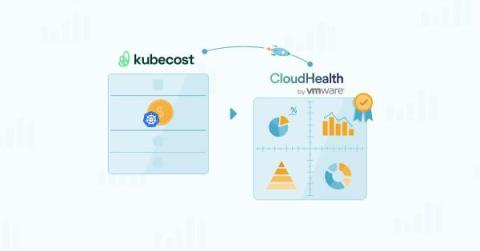
The Limitations Of Combining CloudHealth And Kubecost

Ever since its release in September 2014, Kubernetes has been equally powerful and meme-able in the engineering world. For all the magic of its container orchestration and compute resource management, it’s also mysterious and, to many, confounding — especially when it comes time to pay for it. As we’ve written before, migrating to Kubernetes often means losing cost visibility.

ServiceNow acquires Enable tech to improve health and safety management

I’m excited to announce that ServiceNow has acquired the ToolBox OH&S technology assets of Enable Professional Services, a ServiceNow Elite Partner and Fujitsu company based in Australia. ToolBox OH&S technology—native to the Now Platform—will help accelerate and scale existing health and safety solutions that enhance safety management practices and streamline incident prevention and response processes for both direct and indirect employees.

OpenTelemetry metrics: A guide to Delta vs. Cumulative temporality trade-offs

In OpenTelemetry metrics, there are two temporalities, Delta and Cumulative and the OpenTelemetry community has a good guide on the different trade-offs of each. However, the guide tackles the problem from the SDK end. It does not cover the complexity that arises from the collection pipeline. This post takes that into account and covers the architecture and considerations that are involved end-to-end for picking the temporality.

Clouds, caches and connection conundrums

We recently moved our infrastructure fully into Google Cloud. Most things went very smoothly, but there was one issue we came across last week that just wouldn’t stop cropping up. What follows is a tale of rabbit holes, red herrings, table flips and (eventually) a very satisfying smoking gun. Grab a cuppa, and strap in. Our journey starts, fittingly, with an incident getting declared... 💥🚨

5 reasons to switch to the OpsLogix VMware Management Pack

5 reasons to switch to the OpsLogix VMware Management Pack When you are choosing a solution to monitor your VMware infrastructure in System Center Operations Manager (SCOM), you need to consider several different factors to ensure making the best choice possible. You want to find a solution that is cost-effective, includes all of the necessary features, and that is continuously updated.

Make the Most of your System Center Orchestrator Deployment

By licensing the Microsoft System Center suite, customers unlock a comprehensive array of tools encompassing server management, virtual machine administration, and automation capabilities. Frequently, customers are observed deploying automation use cases with System Center Orchestrator to meet specific infrastructure management needs.

Navigating Data Overload with Cribl

So many businesses today are playing “Hungry, Hungry, (Data) Hippo,” devouring every marble of information they can get their hands on. While it seems like every company has a robust data aggregation system, what most companies don’t have is an efficient way to control what data they store and where that data goes. We all want to make data-driven business decisions, but sorting through tons of data to find useful business insights can be like finding a needle in a whole farm.

Eight Cybersecurity Tips for Businesses in 2023

The online playing field for businesses in multiple niches has expanded, with the internet enjoying an overarching presence in various facets. New and larger markets have become more accessible through online platforms. All an established business needs is computer-based tools and an internet connection that won’t falter. Expansion is often rewarding but has its fair share of risks; thus, melding a nice blend of cybersecurity with a growing company is the safe way to go about it.

Netdata QoS Classes monitoring

Netdata monitors tc QoS classes for all interfaces. If you also use FireQOS it will collect interface and class names. There is a shell helper for this (all parsing is done by the plugin in C code - this shell script is just a configuration for the command to run to get tc output). The source of the tc plugin is here. It is somewhat complex, because a state machine was needed to keep track of all the tc classes, including the pseudo classes tc dynamically creates. You can see a live demo here.