Operations | Monitoring | ITSM | DevOps | Cloud

Rescue Struggling Pods from Scratch

Containers are an amazing technology. They provide huge benefits and create useful constraints for distributing software. Golang-based software doesn’t need a container in the same way Ruby or Python would bundle the runtime and dependencies. For a statically compiled Go application, the container doesn’t need much beyond the binary.

Prometheus Architecture Scalability: Challenges and Tools for Enhanced Solutions

After successfully deploying and implementing a software system, the subsequent task for an IT enterprise revolves around the crucial aspects of system monitoring and maintenance. An array of monitoring tools has been developed in alignment with the software system's evolution and requirements. Monitoring tools for software systems provide the essential insights that IT teams require to comprehend the real-time and historical performance of their systems.

Apache Logs - Turning Data into Insights!

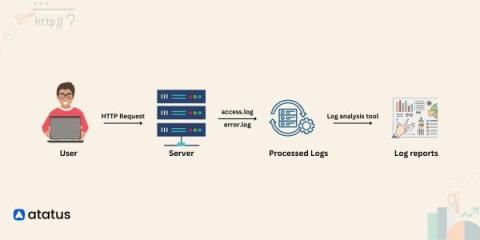
In the vast digital landscape of the internet, where websites and web applications serve countless users daily, there exists a silent but powerful guardian of information – Apache logs. Imagine Apache logs as the diary of your web server, diligently recording every visitor, every request, and every response. At its core, Apache logs capture a variety of critical information. They record the IP addresses of visitors, revealing their geographic locations and potentially malicious activities.

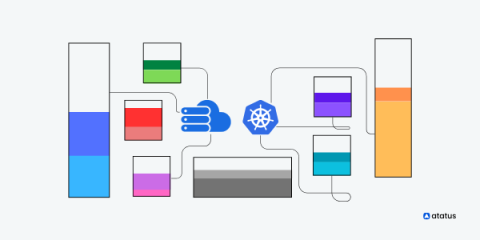
Optimizing Workloads in Kubernetes: Understanding Requests and Limits

Kubernetes has emerged as a cornerstone of modern infrastructure orchestration in the ever-evolving landscape of containerized applications and dynamic workloads. One of the critical challenges Kubernetes addresses is efficient resource management – ensuring that applications receive the right amount of compute resources while preventing resource contention that can degrade performance and stability.

Why Unit Cost Must Be Your North Star Metric In The Cloud

You’re a savvy SaaS business leader, so you already know the importance of keeping costs low to maximize your margins. What you might not have considered, however, is how tracking unit cost in your cloud spend data can help you achieve optimizations far beyond what you’d get with traditional cost-cutting methods. Keep reading to learn how cloud spend unit costs can drive savings you never knew were possible.

Webhook vs. API: Differences, Uses, and Benefits

The extent to which most business software applications rely on application programming interfaces (APIs) and webhooks is hard to overstate. They’re in play when getting the latest stock updates or determining how much a competitor charges for similar products. How different are they from one another, and when should you choose one over the other?.

Put humans in the loop to generate real value from generative AI

Generative AI has shaken up the business and tech world, but the best tech relies on world-class talent to address the fundamental problems that haven’t been solved yet. At ServiceNow, we know the most constructive and value-creating strategies for generative AI are grounded in embedding human experience and expertise into the core capabilities.

Unlocking seamless API management: Introducing AWS API Gateway integration with Elastic

AWS API Gateway is a powerful service that redefines API management. It serves as a gateway for creating, deploying, and managing APIs, enabling businesses to establish seamless connections between different applications and services. With features like authentication, authorization, and traffic control, API Gateway ensures the security and reliability of API interactions.

Making design decisions for ClickHouse as a core storage backend in Jaeger

ClickHouse database has been used as a remote storage server for Jaeger traces for quite some time, thanks to a gRPC storage plugin built by the community. Lately, we have decided to make ClickHouse one of the core storage backends for Jaeger, besides Cassandra and Elasticsearch. The first step for this integration was figuring out an optimal schema design. Also, since ClickHouse is designed for batch inserts, we also needed to consider how to support that in Jaeger.