Operations | Monitoring | ITSM | DevOps | Cloud

How to Configure a Linux Firewall: The Ultimate Guide

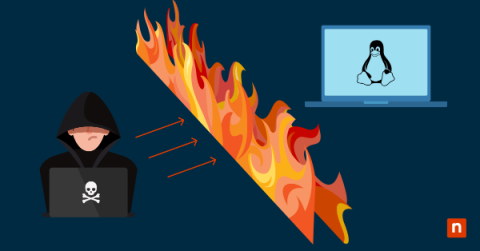
A firewall stands as a digital gatekeeper, meticulously sifting through network traffic and deciding what may pass. This protective shield, fundamental to cybersecurity, is integral in the Linux world. The Linux kernel itself is effectively a de facto packet switching firewall, crafted as it is around the principles of packet filtering at the most fundamental operating system level, thus exemplifying the pivotal role of firewalls in system security.


How we've made Status Pages better over the last three months

A few months ago we announced Status Pages – the most delightful way to keep customers up-to-date about ongoing incidents. We built them because we realized that there was a disconnect between what customers needed to know about incidents, and how easily accessible this information was. For example: As we built them, we focused on designing a solution that powered crystal-clear communication, without the overhead — all beautifully integrated into incident.io.

From LCP to CLS: Improve your Core Web Vitals with Image Loading Best Practices

If you’re a front end developer, there’s a high probability you’ve built (or will build) an image-heavy page. And you’ll need to make it look great by serving high-quality image files. But you’ll also need to prioritize building a high-quality user experience by making sure your Core Web Vitals such as Cumulative Layout Shift and Largest Contentful Paint aren’t negatively affected, which also help with your search engine rankings.

The importance of SDT and how to successfully schedule planned downtime

Scheduled downtime (SDT), also known as planned downtime, lets you perform maintenance, testing, or repairs on your systems, servers, software, data centers, and other infrastructure. While no business likes being offline, this preventative work is essential for ensuring your assets function correctly. Unlike unplanned outages, you can limit downtime so it minimizes impact on your company and customers.

Monitor your mobile tests with Sofy's offering in the Datadog Marketplace

As your apps scale, testing can become repetitive, manual, and time-consuming, leading to slower release cycles and lower-quality code. Sofy is a SaaS platform that enables you to create and run automated tests on your mobile apps without writing any code. Sofy will automatically test your mobile apps on real iOS and Android devices, so you can optimize their performance and debug end-user experiences without setting up or maintaining your own test infrastructure.

Continuous Improvement and Pure Excellence: Advantages of RCA in Troubleshooting

As a good technology superhero you will know that in the world of troubleshooting, there is an approach that goes beyond simply fixing superficial symptoms. We call this approach “Maximum Heroics” or Root Cause Analysis (ACR), a charming method that seeks to unravel the mysteries behind an incident. Through the RCA, the causal factors of an incident are examined, and why, how and when it happened are broken down in order to prevent it from repeating itself and ensure smooth continuity.

Custom Management Packs - for your needs

Each organization's IT environment has its own prerequisites and unique challenges. This also means that there are different needs for the monitoring and automation of every organization's critical applications. However, finding a monitoring solution that fits your unique needs is not always easy. Especially if your organization has particular regulations and demands that need to be taken into consideration.

Efficiently Tracing Zephyr Syscalls

Using Tracealyzer to view applications running on Zephyr RTOS comes with a special challenge: unlike some other microcontroller-oriented real-time operating systems, Zephyr exposes its kernel services via a syscall layer. A syscall is essentially a way to programmatically communicate with the operating system kernel from user level code.

How universities preserve and protect digital assets with Grafana dashboards

Anthony Leroy has been a software engineer at the Libraries of the Université libre de Bruxelles (Belgium) since 2011. He is in charge of the digitization infrastructure and the digital preservation program of the University Libraries. He coordinates the activities of the SAFE distributed preservation network, an international LOCKSS network operated by seven partner universities.