Operations | Monitoring | ITSM | DevOps | Cloud

Your Secret Weapon Against Cyber Threats: Enhancing Cyber Resiliency With Cribl

In a previous webinar, we discussed the importance of ensuring that your enterprise is cyber resilient and the politics around establishing a thriving cybersecurity practice within your organization. This week’s discussion covers specific tactics and solutions you can implement when you begin this initiative — watch the full webinar replay to learn more about how Cribl supports your cyber resiliency efforts.

AI adoption for software: a guide to learning, tool selection, and delivery

This post was written with valuable contributions from Michael Webster, Kira Muhlbauer, Tim Cheung, and Ryan Hamilton. Remember the advent of the internet in the 90s? Mobile in the 2010s? Both seemed overhyped at the start, yet in each case, fast-moving, smart teams were able to take these new technologies at their nascent stage and experiment to transform their businesses. This is the moment we’re in with artificial intelligence. The technology is here.

Heroku Monitoring: What To Look For In Your Addons

Heroku is a cloud-based platform that supports multiple programming languages. It functions as a Platform as a Service (PaaS), allowing developers to effortlessly create, deploy, and administer cloud-based applications. With its compatibility with languages like Java, Node.js, Scala, Clojure, Python, PHP, and Go, Heroku has become the preferred choice for developers who desire powerful and adaptable cloud capabilities.

What is Shadow IT? Will AI make this more challenging?

Shadow IT is a term used to describe IT systems, applications, or services that are used within an organization without the explicit approval, knowledge, or oversight of the IT department or the organization’s management. It typically arises when employees or departments adopt and use software, hardware, or cloud services for their specific needs without going through the official IT procurement or security processes.

Better anomaly detection in system observability and performance testing with Grafana k6

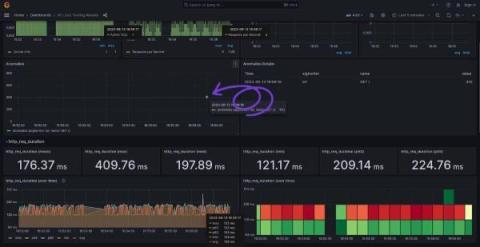
Grzegorz Piechnik is a performance engineer who runs his own blog, creates YouTube videos, and develops open source tools. He is also a k6 Champion. You can follow him here. From the beginning of my career in IT, I was taught to automate every repeatable aspect of my work. When it came to performance testing and system observability, there was always one thing that bothered me: the lack of automation. When I entered projects, I encountered either technological barriers or budgetary constraints.

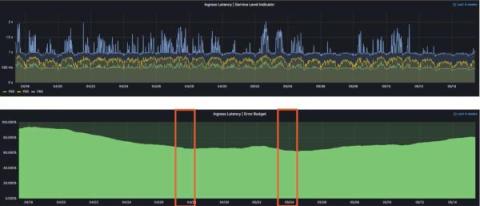
How to monitor SLOs with Grafana, Grafana Loki, Prometheus, and Pyrra: Inside the Daimler Truck observability stack

In order for fleet managers at Daimler Truck to manage the day-to-day operations of their vast connected vehicles service, they use tb.lx, a digital product studio that delivers near real-time data along with valuable insights for their networks of trucks and buses around the world. Each connected vehicle utilizes the cTP, an installed piece of technology that generates a small mountain of telemetry data, including speed, GPS position, acceleration values, braking force and more.

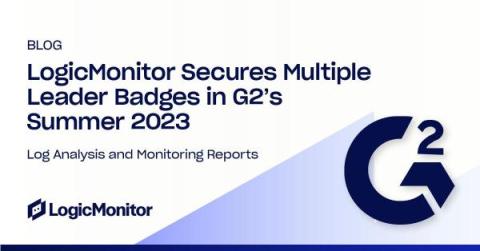
LogicMonitor Secures Multiple Leader Badges in G2's Fall 2023 Log Analysis and Monitoring Reports

Fall 2023 Reports, including Enterprise Monitoring, Cloud Infrastructure Monitoring, and Network Monitoring were announced September 12, 2023 from G2, the world’s leading business software review platform. Take a look inside highlights of the G2 Fall 2023 Log Analysis and Monitoring Reports below to see where LogicMonitor stood out among the rest.

New DX UIM Release: Start Monitoring New Linux Distributions on Day 1

From DX UIM 20.4 CU4 onward (that is, releases that have robot version 9.36 or above), robots automatically support Linux versions with newer GNU C Library (commonly known as “glibc”) versions. Prior to CU4, DX UIM robots needed certification and a release to provide support or compatibility with newer Linux operating systems that have a higher glibc version.

The IT Compliance Management Process: Steps, Roles, And Main Tasks

Compliance Management is the set of practices that keeps your organization safe and in order. Implemented effectively, it can increase colleague and customer confidence, reduce the potential for legal exposure, and support governance. The implementation process comes with its challenges, as you have to coordinate different teams and at the same time address a range of regulations and laws.