Operations | Monitoring | ITSM | DevOps | Cloud

The latest News and Information on Log Management, Log Analytics and related technologies.

How to get actionable insights from your data

“When you peel back business issues, more times than not, you will find that the root cause is directly tied to data problems,” says Matthew Minetola, CIO at Elastic®. In today's world, all companies, new and old, are awash in data from multiple sources — stored in multiple systems, versions, and formats — and it’s getting worse all the time.


How to Log HTTP Headers With HAProxy for Debugging Purposes

HAProxy offers a powerful logging system that allows users to capture information about HTTP transactions. As part of that, logging headers provides insight into what's happening behind the scenes, such as when a web application firewall (WAF) blocks a request because of a problematic header. It can also be helpful when an application has trouble parsing a header, allowing you to review the logged headers to ensure that they conform to a specific format.

Code, Coffee, and Unity: How a Unified Approach to Observability and Security Empowers ITOps and Engineering Teams

In today's fast-paced and ever-changing digital landscape, maintaining digital resilience has become a critical aspect of business success. It is no longer just a technical challenge but a crucial business imperative. But when observability teams work in their own silos with tools, processes, and policies, disconnected from the security teams, it becomes more challenging for companies to achieve digital resilience.

Simplifying Data Lake Management with an Observability Pipeline

Data Lakes can be difficult and costly to manage. They require skilled engineers to manage the infrastructure, keep data flowing, eliminate redundancy, and secure the data. We accept the difficulties because our data lakes house valuable information like logs, metrics, traces, etc. To add insult to injury, the data lake can be a black hole, where your data goes in but never comes out. If you are thinking there has to be a better way, we agree!

Lookup Tables and Log Analysis: Extracting Insight from Logs

Extracting insights from log and security data can be a slow and resource-intensive endeavor, which is unfavorable for our data-driven world. Fortunately, lookup tables can help accelerate the interpretation of log data, enabling analysts to swiftly make sense of logs and transform them into actionable intelligence. This article will examine lookup tables and their relationship with log analysis.

Top Elasticsearch Metrics to Monitor | Troubleshooting Common error in Elasticsearch

Monitoring Elasticsearch metrics is absolutely essential! Monitoring gives you information about the functionality, overall condition, and performance of your Elasticsearch cluster. Without monitoring, you risk missing important “red-flags” that could make your cluster inaccessible or crash. Which could result in data loss and downtime; both of which would be expensive for your company.

A Complete Guide to Tracking CDN Logs

The Content Delivery Network (CDN) market is projected to grow from 17.70 billion USD to 81.86 billion USD by 2026, according to a recent study. As more businesses adopt CDNs for their content distribution, CDN log tracking is becoming essential to achieve full-stack observability. That being said, the widespread distribution of the CDN servers can also make it challenging when you want visibility into your visitors’ behavior, optimize performance, and identify distribution issues.

Parsing logs with the OpenTelemetry Collector

This guide is for anyone who is getting started monitoring their application with OpenTelemetry, and is generating unstructured logs. As is well understood at this point, structured logs are ideal for post-hoc incident analysis and broad-range querying of your data. However, it’s not always feasible to implement highly structured logging at the code level.

What Is ITOPs? IT Operations Defined

IT operations, or ITOps, refers to the processes and services administered by an organization's IT staff to its internal or external clients. Every organization that uses computers has a way of meeting the IT needs of their employees or clients, whether or not they call it ITOps. In a typical enterprise environment, however, ITOps is a distinct group within the IT department. The IT operations team plays a critical role in accomplishing business goals.

Developing the Splunk App for Anomaly Detection

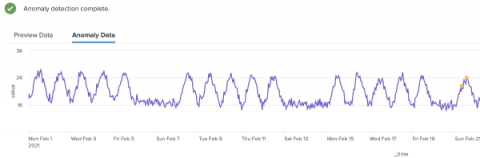
Anomaly detection is one of the most common problems that Splunk users are interested in solving via machine learning. This is highly intuitive, as one of the main reasons our Splunk customers are ingesting, indexing, and searching their systems’ logs and metrics is to find problems in their systems, either before, during, or after the problem takes place. In particular, one of the types of anomaly detection that our customers are interested in is time series anomaly detection.