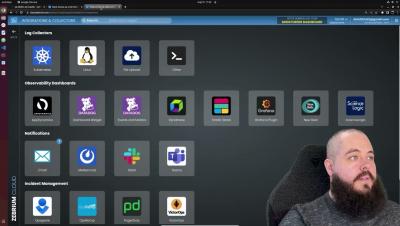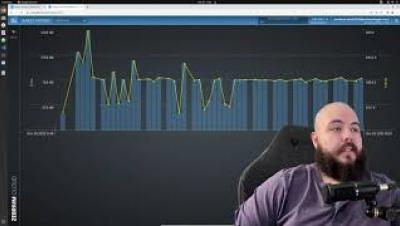
Zebrium Symposium Live Demo
Stop wasting time hunting through logs for the root cause. Watch this live Zebrium demo from Symposium.


The latest News and Information on Monitoring for Websites, Applications, APIs, Infrastructure, and other technologies.
When thinking about holistic end-to-end observability, it can help to start with what you already have. Many government agencies are already strategically ingesting and storing logs — a key component of observability. More than a year and a half after the release of M-21-31, US government agencies continue to work through the logging maturity models outlined in the memorandum.
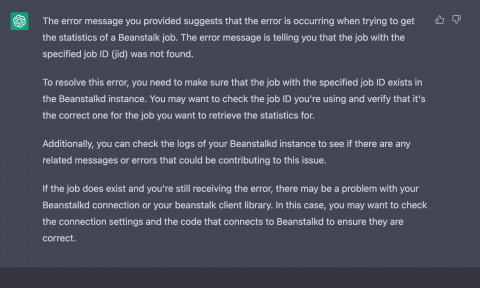
One of the hardest tasks for software engineers is often having to stop what you are doing and look into a software bug (error), find the root cause and fix it quickly. This is hard because you may have never seen the affected code (someone else wrote it), it could be code you wrote a long time ago or just the context switching from what you are working on right now.
Read more about Netdata introducing paid subscriptions. All Netdata functionality is and will be available for free forever in the Community Plan. Paid tiers include features targeted for businesses and users who would need to customise their monitoring solution with different levels of user access, other notification mechanisms, etc.
Argo CD is a declarative continuous delivery tool for Kubernetes developed by the Cloud Native Computing Foundation (CNCF). Argo CD automates your application deployment by continuously monitoring the live state of your containers and comparing it against the desired state in your Kubernetes manifest files, then pulling changes into your Kubernetes clusters as needed.
On any given day, network administrators have to contend with significant challenges. They often struggle with key questions: How do I ensure I’m spotting traffic anomalies? How do I use our resources most efficiently? How can I intelligently plan for network capacity upgrades? By employing network flow monitoring, administrators can gain accurate insights into these topics.
Logs are imperative for troubleshooting, performance analysis, health monitoring, and application integrity and security. Log management tools clearly understand how users interact with apps and systems and provide insight into improving software reliability, increasing productivity, reducing risks, and ultimately improving the user experience. Through log management tools, users can further integrate and enrich all of their logs, making queries quicker and more effective.