The latest News and Information on Monitoring for Websites, Applications, APIs, Infrastructure, and other technologies.
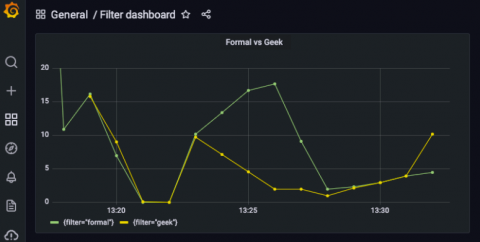
Do you actually know what your customers are looking for? A way to uncover new business opportunities is to analyze your system, collect what you really need, and visualize it through a comprehensive graph! Log traces are a great place to start because they usually contain useful information on your customers' interests. You just need to transform them.
Here’s the summary of the hardware and the software that powers Healthchecks.io.
The need for in-depth network monitoring is growing exponentially as organizations expand in size and more companies are established. Increased monitoring needs demand a feature-rich tool to simplify networks and get a clear view of their underlying infrastructure. Diagnosing network faults and ensuring a well-balanced operation of all network devices is the primary task of a network admin any day.
At Datadog, we’re dedicated to building a platform that helps teams detect, troubleshoot, and resolve issues in their applications and infrastructure. We know that our customers need to be able to debug issues, explore ideas, and manage incidents efficiently, and that means having access to tools that can help them seamlessly share information and leverage the expertise of their distributed teams.
JavaScript mutators shine among the improvements in Sensu Go 6.5 – they are both more effective and more efficient at transforming Sensu event data than pipe mutators. This post explores the advantages of JavaScript mutators and includes an example, but first, a brief review. In the Sensu observability pipeline, checks generate events, which Sensu then filters, transforms, and processes. A mutator is a component that transforms the event data.
I’m Tim, a Product Design Manager at LogDNA. My team is responsible for creating a beautiful and easy-to-navigate user interface so that you can easily access, and gain value from, your logs. We’ve been working on making our product’s navigation more accessible and are rolling out a mixture of subtle and more noticeable changes.
Time series data differs from “normal” data in an interesting way. The essential characteristic is that the data’s primary point of reference is a timestamp showing at which point in time a sample of data was measured. Time series databases like InfluxDB are helpful for situations that involve this kind of data.