Operations | Monitoring | ITSM | DevOps | Cloud

The latest News and Information on Monitoring for Websites, Applications, APIs, Infrastructure, and other technologies.

5 Performance Measurement Metrics for Node.js Applications

Node.js applications are those that are created on the Node.js platform, which is an event-driven I/O server-side JavaScript environment based on Google Chrome's V8 engine. Since both the server-side and client-side are written in JavaScript, Node.js allows for easier and faster code implementation, as well as processing requests quickly and simultaneously. This is especially useful for developing real-time applications, such as chat and streaming.


Nastel Products Are Not Affected by Log4j Vulnerability Issues

Recent news about Log4j has enterprises and vendors scrambling for information and answers, including customers of messaging middleware and Integration Infrastructure Management (i2M) products. Nastel Technologies customers will not be exposed to any risks from this vulnerability, but enterprises are encouraged to check with their Cloud and other solution vendors to protect themselves and their data.

ITOM 2021 recap: Features that enabled an incredible network management experience

From introducing new automation capabilities to offering all new integration options this past year, ManageEngine’s ITOM suite of solutions have been supercharged to seamlessly manage complex networks. These new, powerful product enhancements and feature releases have honed the ITOM suit’s superior network management capabilities for IT admins worldwide.

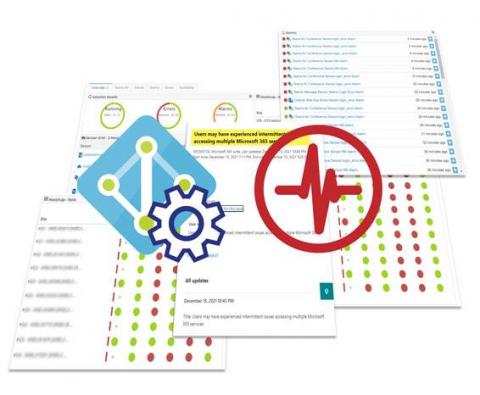
Global Azure AD Outage Affecting Microsoft 365 Services December 15

Microsoft has had its own share of outages recently and during the evening of December 15th Azure AD was the cloud culprit. As a result, the Exoprise sensors detected this Microsoft 365 outage more than an hour before Microsoft informed customers of the issue. Here’s some of the errors that users were experiencing if they attempted to sign into Microsoft services: Most of our worldwide customers knew well in advance of the problem before users or business suffered.

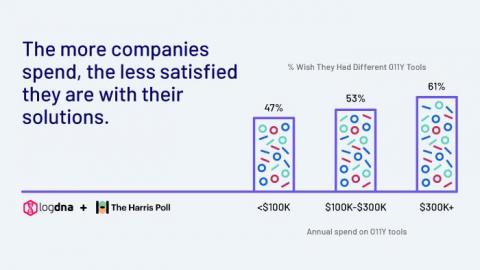
The 2022 State of Observability Report

Interest in observability is at an all-time high. When we attended KubeCon in Los Angeles in October, observability and security were everywhere—in conversations with attendees and other vendors, during sessions, and in messaging at booths—indicating that there’s still an unmet need. In fact, Gartner declared that observability is at the ‘peak of inflated expectations' in a recent Hype Cycle report.

Five Critical Insights You Won't Get With Your Cloud Provider's Monitoring Solution Alone

When meeting with a current or prospective Splunk customer, one question we are often asked is “Why do I need Splunk when I can just use AWS Cloudwatch, Azure Monitor, or GCP Cloud Operations Suite (formerly known as Stackdriver) for my cloud monitoring needs?” And what a great question it is!

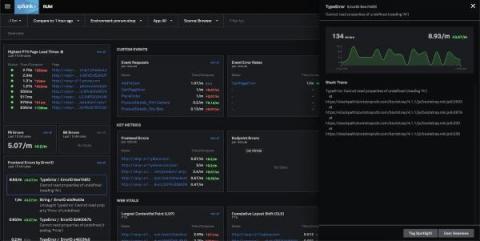
Splunk RUM Frontend Error Monitoring is Now Generally Available!

Debugging errors is an essential component to SRE and developer workflows. “How do we prioritize and isolate JavaScript errors more effectively?” is a top challenge we hear from engineering teams looking to improve end-user experience. Therefore, we are excited to announce the general availability of Splunk RUM frontend error monitoring.

Tutorial: Getting Started with AWS Lambda and Node.js

AWS Lambda is an incredible tool that works well with an abundance of other services on AWS. In this hands-on walkthrough, we’ll show you how to get started and create your first Node.js AWS Lambda function. Once upon a time, not so long ago, a word caught my ear. Lambda. That struck a chord, remembering the good old days of playing Half-Life as a kid. Little did I know what AWS Lambda was and how incredibly awesome it is. If you’re intrigued, stick around.

Replay Log in Distributed Icinga Environments

An essential part of a distributed monitoring environment with Icinga that includes master, satellite and agent nodes is the replay log functionality. The replay log is a built-in mechanism to ensure nodes in a distributed setup keep the same history e.g. check results, notifications and downtimes if nodes are temporarily disconnected and then reconnect.