Operations | Monitoring | ITSM | DevOps | Cloud

The latest News and Information on Monitoring for Websites, Applications, APIs, Infrastructure, and other technologies.

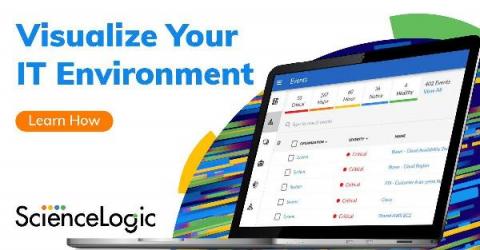
The Importance of Visualizing Your IT Environment

Most everyone has some source of information on the health of their environments. Your experts know where to go and what to do when you get those cryptic messages and log files. To those content with the deep knowledge and where events and log files supply you with everything you need, I applaud you – you belong to a rare breed. Combing through logs or events takes time and effort, and rarely does it yield the speediest “return-to-service” solution.
Kubernetes observability challenges in cloud-native architecture

Kubernetes is the de-facto platform for orchestrating containerized workloads and microservices, which are the building blocks of cloud-native applications. Kubernetes workloads are highly dynamic, ephemeral, and are deployed on a distributed and agile infrastructure. Although the benefits of cloud-native applications managed by Kubernetes are plenty, Kubernetes presents a new set of observability challenges in cloud-native applications. Let’s consider some observability challenges.

CDN Observability - Why You Must Monitor Your Extended Infrastructure

The content delivery network (CDN) has been an integral part of application infrastructure for more than two decades. A CDN is critical to the end-user experience, but it is no longer considered to be just a caching server. It has evolved to provide security from cyber threats, including DDOS attacks along with front end optimization. Although CDN services are now an indispensable part of any application infrastructure, visibility into CDN performance remains limited.

Read active log files more quickly and easily with the new filestream input in Filebeat

With Elastic 7.14, the filestream input, the successor of log input, is now generally available in Filebeat. This new, superior input provides better support for reading active log files, with faster reaction time when there is backpressure in the system, quicker registry updates, better cooperation with external log rotation tools, and more.

Dashbird Explained: the why, what and how

Here’s everything you need to know to get started with Dashbird – the complete solution for End-to-End Infrastructure observability , Real-time Error Tracking, and Well-Architected Insights. When working with AWS, One cannot emphasize enough the architectural best practices for designing workloads. One of those best practices is to design the solution in such a way that the monitoring of infrastructure and troubleshooting of errors and problems is achieved effortlessly.

With DX NetOps, Oil Firm Scales Remote Network Access for 60,000 Users

Like many in 2020, executives at this large oil and gas services company made the decision to have most employees work from home and to restrict all nonessential business travel in order to keep their employees safe. The company rose to this challenge at the very outset of the pandemic. A virtual private network (VPN) is the most common and secure way to provide access to company resources and data when employees are traveling or working remotely.

Making the LogDNA UI more accessible

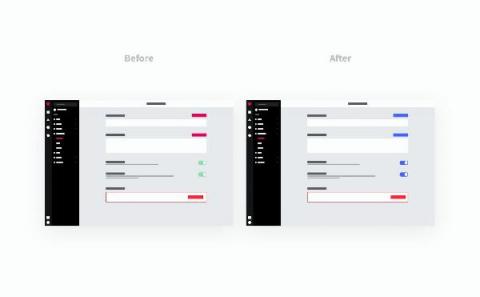
I’m Tim, a Product Design Manager at LogDNA and a massive coffee and magic enthusiast. My team is responsible for creating a beautiful and easy-to-navigate user interface so that you can easily access, and gain value from, your logs. We’ve been working on making our product more accessible and are about to roll out some subtle changes.

Logit.io To Double Down On Their Commitment To Transparent Pricing, No Data Egress Fees & Zero Vendor Lock-In

ELK based log management platform, Logit.io announced today their intention to further raise awareness of the importance of full transparency for cloud-native observability platforms in regards to billing, egress and zero vendor lock-in.