Monitoring network | Pandora FMS
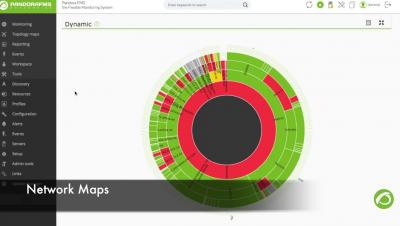
Pandora FMS Enterprise is a monitoring software for companies that allows you to monitor from 100 devices to several tens of thousands, unifying all your systems, networks and applications in a single tool.


The latest News and Information on Monitoring for Websites, Applications, APIs, Infrastructure, and other technologies.
TimescaleDB is an open source database packaged as a Postgres extension that supports time series, but “it looks as if it were just Postgres,” said Timescale’s Head of Product, Diana Hsieh. “So you can actually use the entire ecosystem. You can use all of the functions that are enabled in Postgres – like JSON indexes, relational tables, post JSON – and they all work with Timescale.”
Whew. May is over, finally. It’s such a rude month, pretending like its summer when it actually is not summer. Get out of here, May. Anyway, hello, June! Here’s everything we shipped in May. Enjoy.
In our ongoing efforts to make it easier to automate monitoring environments we recently introduced a new module for Icinga Web 2. This module is first and foremost a platform which lets you have an overview over all the certificates you are using in your environment to prove the identity of your devices. You can take a quick glance or a very detailed look at them.
We’re very pleased to announce the official launch of our new Java tracer for AWS Lambda. This release extends Lumigo’s real-time monitoring and observability tools to all JVM-based AWS Lambda applications, with support for Apache Groovy, Scala and Kotlin among others.
Single Sign-On (SSO) is a valuable tool for enterprise companies managing multiple users across networks. Because user management becomes so difficult when dealing with hundreds or thousands of users, many companies use an advanced system like AWS to take care of it all.
Whether a team is one person or one hundred, automated testing uncovers issues in an application before the code is deployed to production. The earlier a problem is diagnosed, the cheaper and less impact it has on you (the developer) and the organization.
Five worthy reads is a regular column on five noteworthy items we’ve discovered while researching trending and timeless topics. This week, we explore how the agile philosophy can help organizations manage their operations.
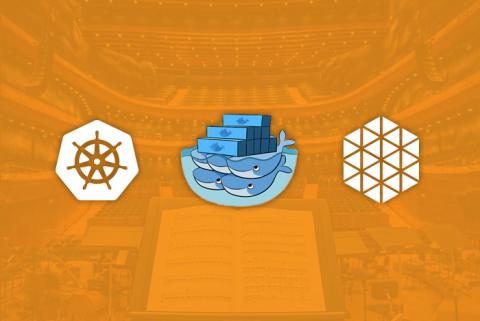
How are you deploying your applications in 2019? Are you using containers yet? According to recent research over 80% of you are. If you are within this group, were you initially sold on the idea of containers but found that in reality, the complexity involved with this approach makes it a difficult trade-off to justify? The community is aware of this and has come up with a remedy to ease the pain, and it’s called container orchestration.