Operations | Monitoring | ITSM | DevOps | Cloud

The latest News and Information on Observabilty for complex systems and related technologies.

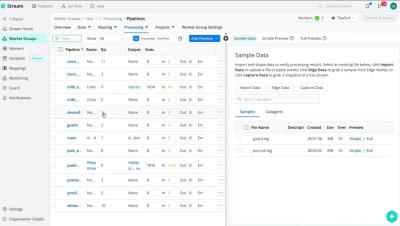
Simplify XML log collection and processing with Observability Pipelines

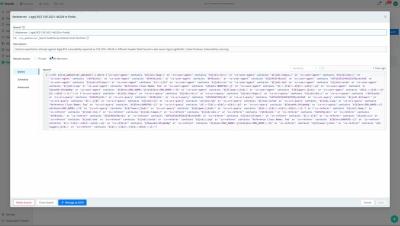
In Microsoft-based environments, Windows event logs capture critical security events like user logins, privilege escalations, and system changes. These logs are vital for compliance and investigations. However, they’re natively formatted in XML, a verbose and deeply nested structure that is hard to search without preprocessing and inefficient to store.

AI in observability at Grafana Labs: Making observability easy and accessible for everyone

Did you know that observability has been around for more than six decades? It all goes back to a Hungarian-American inventor named Rudolf Kálmán who thought about how external outputs could measure the internal state of a machine. Kálmán wrote about monitoring single-input single-output systems, but our demands are very different today. We need to observe monoliths, microservices, clusters, pods, regions, and many more.

Observability trends in Brazil: insights from our localized survey

Organizations in Brazil are eager to adopt some of the latest observability trends and technologies as they look to keep their software running as smoothly as possible, according to analysis of a micro survey recently conducted by Grafana Labs. Observability is an evolving space, and this is the first time Grafana Labs has run a Brazilian version of our annual Observability Survey.

APM vs observability: why your definitions are broken

Recently I was asked to offer my opinions on Application Performance Management (APM) and Observability (o11y) - how they overlap, compete, and conflict. I was just one of several folks who's ideas were solicited, so (understandably) some of my thoughts were left out of the original article. HOWEVER, I'm never one to let good words (or at least a lot of words) go to waste, so I thought I'd pull them together here.

Error Analysis in Honeycomb for Frontend Observability Now in Public Beta

You just shipped your latest frontend release. It passed QA, CI ran, and it looked great in pre-production. But now it’s live and users are hitting an unexpected error: TypeError: undefined is not a function in Chrome. Your error tracking tool flags the exception. You get a stack trace, some breadcrumbs, maybe a session replay.

Introducing Logz.io Open 360 AI: The Next Generation of Observability Is Here

Traditional observability tools can’t keep up with modern complexity. Dashboard and alert-based approaches still rely heavily on manual processes, resulting in longer troubleshooting cycles, slower decisions, and higher MTTR. Engineering teams need something better. Today we’re launching Open 360 AI, the first observability platform designed for both humans and AI agents working together.

Using GreptimeDB as Prometheus Data Lake in Coroot

Coroot is excited to feature an editorial from the open source observability database GreptimeDB as an Open Source Spotlight. We hope to improve the work of our global community of SREs and DevOps professionals by sharing exciting projects like GreptimeDB, which make innovation accessible for everyone through the freedom of open source.

Size-capped telemetry storage with ClickHouse and Coroot

Cloud platforms make it incredibly easy to store data. Object storage feels endless, and block volumes can be resized anytime. That’s great, until you check the cost. In some cases, like financial transactions, storage costs are tiny compared to the value of the data. But observability is a different story. Logs, traces, and profiles can be extremely detailed and often take up more space than the actual business data. Yes, there are situations where logs need to be kept for compliance reasons.

Leaning into AI, ML, and observability to manage your ever-growing infrastructure

The complexity and scale of modern infrastructure requires an equally intelligent set of observability tools to effectively monitor it. Remember when scaling meant ordering new servers and racking them in a data center? Remember when cloud providers first offered access to seemingly infinite virtual machines at the click of a button? Remember when Kubernetes made it trivial for infrastructure to automatically scale itself based on demand?

Coralogix becomes first observability vendor to earn ISO/IEC 42001:2023 certification for responsible AI

We’re proud to announce that Coralogix is now officially ISO/IEC 42001:2023 certified, becoming the first observability vendor to achieve this globally recognized standard for responsible AI management. ISO/IEC 42001:2023 is the world’s first international standard for Artificial Intelligence Management Systems (AIMS). It provides a comprehensive framework for how organizations should govern AI, focusing on transparency, ethical use, accountability, and regulatory compliance.