Operations | Monitoring | ITSM | DevOps | Cloud




Private Optical Network Solutions for Enterprise

An introduction to Mattermost as your DevOps Command Center
Mattermost is a platform based on collaboration — not built simply for facilitating team and asynchronous communication, but built on the philosophy that having the ability to collaborate efficiently makes the world safer and more productive for everyone. This is true in many day-to-day situations in an organization, but it is especially true in the world of DevOps. When an emergency arises, information needs to be moved from person to person and team to team as quickly as possible.

Introducing Data-in-Transit Encryption for Calico Enterprise
We’re excited to announce that Calico Enterprise, the leading solution for Kubernetes networking, security and observability in hybrid and multi-cloud environments, now includes encryption for data-in-transit.
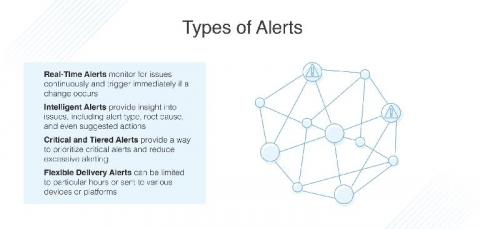
All About Network Alerts + Best Tools

5 Service Desk Tickets Sure to Keep You Awake at Night

The Future of Ops Careers
Have you seen Lambda: A Serverless Musical? If not, you really have to. I love Hamilton, I love serverless, and I’m not trying to be a crank or a killjoy or police people’s language. BUT, unfortunately, the chorus chose to double-down on one of the stupidest and most dangerous tendencies the serverless movement has had from day one: misunderstanding and trash-talking operations.

Benchmarking and sizing your Elasticsearch cluster for logs and metrics
With Elasticsearch, it's easy to hit the ground running. When I built my first Elasticsearch cluster, it was ready for indexing and search within a matter of minutes. And while I was pleasantly surprised at how quickly I was able to deploy it, my mind was already racing towards next steps. But then I remembered I needed to slow down (we all need that reminder sometimes!) and answer a few questions before I got ahead of myself.

How Expedia modernized operations on one of the world's most fastest-moving IT stacks
It’s not everyday we are given a chance to get a first-hand look at how one of today’s leading and most advanced enterprises operates its IT stack. That’s why we were very excited when three senior IT executives from Expedia accepted our invitation to participate in a webinar discussing the company’s IT modernization journey.