Operations | Monitoring | ITSM | DevOps | Cloud

My pledge for Safer Internet Day

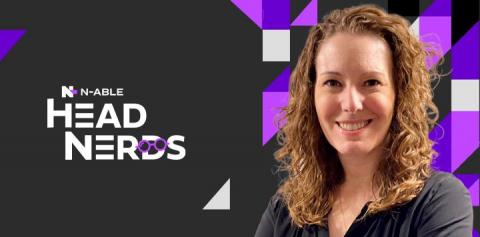
I was asked to write a pledge to help promote the importance of Safer Internet Day, which is taking place February 8. If you are not familiar with Safer Internet Day, it is a day dedicated to highlighting practical ways in which you can be involved in creating and maintaining a better online world. You can read more about it here. I took on this task and actually came up with two pledges: a personal and business one.
New Year, New Features in Xray

Let’s start 2022 off the right with new features and updates that will extend JFrog Xray’s power and reach in addressing challenges with securing your binaries from development to production. Join Sarit Tager, VP Product Security as she discusses how Xray provides intelligent supply chain security and compliance at DevOps speed. JFrog Xray is a software composition analysis (SCA) solution that scans your open source software (OSS) dependencies for security vulnerabilities and license compliance issues.

Open Source Cybersecurity: Towards a Democratized Framework

Today, anyone can contribute to some of the world’s most important software platforms and frameworks, such as Kubernetes, the Linux kernel or Python. They can do this because these platforms are open source, meaning they are collaboratively developed by global communities. What if we applied the same principles of democratization and free access to cybersecurity?

UI Breadcrumbs for Android Error Events

In cases, when a crash happens in your Android application, you want more context on what occured before the issue — kind of like following breadcrumbs to the exception. Our SDKs automatically report breadcrumbs for activity lifecycle events, system events, HTTP requests, and many more. Now, Android developers will also see UI events listed as breadcrumbs and get the full picture of what happened without ever having to recreate the issue.

How to Use Big Data with Spark Successfully Today

You’d probably struggle to find a big data practitioner who’s never heard of Apache Spark or used big data with Spark. We’d even go so far as to say it’s near impossible—and that’s for good reason. Spark is well known because it’s fast, reliable, and capable. Let’s dive into why that is, answer some common questions surrounding Spark computing, how to easily use it to achieve success, and more.

Chimera: Painless OAuth for Plugin Frameworks

Plugins can help teams unlock the full potential of Mattermost, but they aren’t always ready to go out of the box. Learn how Chimera streamlines plugin configuration via an OAuth2 Proxy. One of the best aspects of any software offered in the Cloud is the ability to start using it in just a matter of minutes. The same is true for the Mattermost Cloud offering.

How One Company Accidently Autoscaled to 200 Nodes and Crashed The App

This article is based on a true story. The names of the company and people involved were changed to protect the innocent 🙂 . A few weeks ago, we were contacted by a pretty big e-commerce company. We can’t really share their name but, for the purpose of this story, let’s call them “KubeCorp Inc”. They reached out to us following an edge-case incident they had, which resulted in severe downtime.

Predefine values of custom pipeline variables

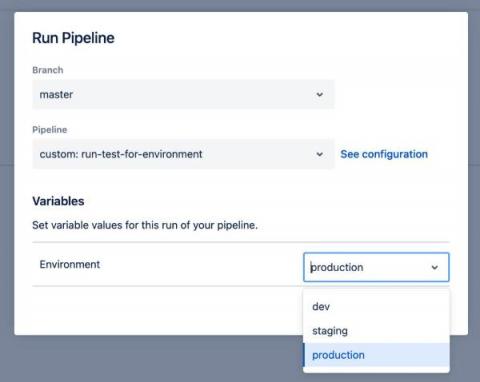
Recently, we introduced support for default values in custom pipeline variables. Today, we're happy to announce the ability to make pipeline variables configuration more flexible with predefined values. We added a property to predefine values that can be assigned to a variable. It helps avoid errors, and improves the user experience. Instead of typing a variable value, you can choose it from a dropdown.

How Your Web Monitoring Benefits From Multi-Channel Alerting

Have you ever had to purchase a CPU or a GPU? If so, you have probably come across the term “bottlenecking”. There is a certain threshold where output exceeds ability to process, and that can prevent optimal system functionality. One of the methods used in computing to overcome these bottlenecks is multi-threading, where requests are processed simultaneously by multiple threads. We can apply a similar principle to downtime monitoring.