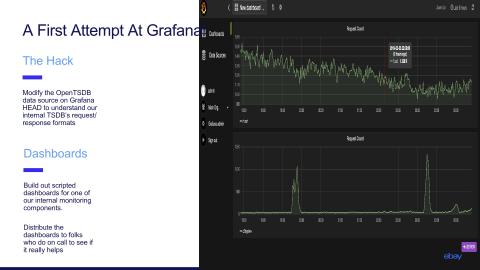
In the beginning, the mission of the logging and monitoring team at eBay was simple: “to give out APIs that the developers in the company could use to instrument their applications [in order] to send logs,” Vijay Samuel said during his talk at GrafanaCon about eBay’s journey to using Grafana plugins. “We had our own developers who built out UIs for being able to search view and debug their issues. And metrics were no different from logs.
Remember Microsoft’s trusty assistant, the annoying/endearing Clippy? We built something similar for the modern web, minus the annoying parts, and discovered that, if done right, it can increase user engagement and success with your product.
As the first part of a three-part series on Apache Kafka monitoring, this article explores which Kafka metrics are important to monitor and why. When monitoring Kafka, it’s important to also monitor ZooKeeper as Kafka depends on it. The second part will cover Kafka open source monitoring tools, and identify the tools and techniques you need to further help monitor and administer Kafka in production.
Open source software adoption continues to grow within enterprises (even for legacy applications), beyond just startups and born-in-the-cloud software. In this second part of our Kafka monitoring series (see the first part discussing Kafka metrics to monitor), we’ll take a look at some open source tools available to monitor Kafka clusters. We’ll explore what it takes to install, configure, and actually use each tool in a meaningful way.
Monitoring Kafka is a tricky task. As you can see in the first chapter, Kafka Key Metrics to Monitor, the setup, tuning, and operations of Kafka require deep insights into performance metrics such as consumer lag, I/O utilization, garbage collection and many more. Sematext provides an excellent alternative to other Kafka monitoring tools because it’s quick and simple to use.
Over the last six months, Opsgenie’s customer base has expanded significantly. We’ve become the tool of choice for teams that are new to operating always-on services, as well as those who have been left disappointed by alternative solutions. We can claim many advantages over our competition, but here are the top ten reasons Dev and Ops teams are choosing Opsgenie.