Operations | Monitoring | ITSM | DevOps | Cloud

SQL Performance Tuning: 7 Practical Tips for Developers

Being able to execute SQL performance tuning is a vital skill for software teams that rely on relational databases. Vital isn’t the only adjective that we can apply to it, though. Rare also comes to mind, unfortunately. Many software professionals think that they can just leave all the RDBMS settings as they came by default. They’re wrong. Often, the default settings your RDBMS comes configured with are far from being the optimal ones.
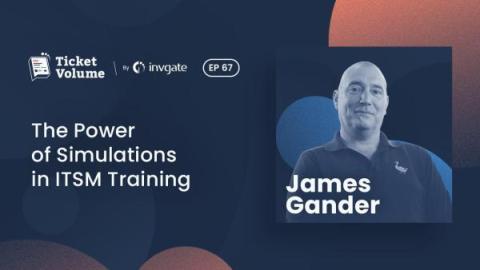

James Gander on the Power of ITSM Simulation in Training

Traditional IT Service Management (ITSM) training methods have long been associated with uninspiring, dry experiences. It's time to introduce a game-changer – ITSM simulations. This innovative approach is poised to completely transform the training landscape by reinventing how we grasp and implement ITSM principles. Simulations represent a paradigm shift in training, providing a hands-on, immersive learning experience that allows participants to apply ITSM principles in real-world scenarios.

Differences Between SharePoint On-Premise and SharePoint Online

So, you’re knee-deep in the world of Microsoft SharePoint, huh? If you’re an IT professional, you’re well aware that SharePoint is no longer just a “nice-to-have” but more of a “must-have.” You’ve got two flavors to choose from: SharePoint On-Premise and SharePoint Online. Which one is the right fit for your organization? Buckle up, because we’re about to dive deep into the nitty-gritty differences, pros, cons, and everything in between.

Why You Need An Application Performance Monitoring Tool

As organisations strive to deliver seamless user experiences, maximise operational efficiency, and maintain a competitive edge, the need for comprehensive Application Performance Monitoring (APM) tools becomes increasingly evident. APM tools offer invaluable insights into the performance and behaviour of applications in real-time. They go further than the conventional monitoring approach by providing a holistic view of the entire stack, encompassing servers, databases and user interactions.

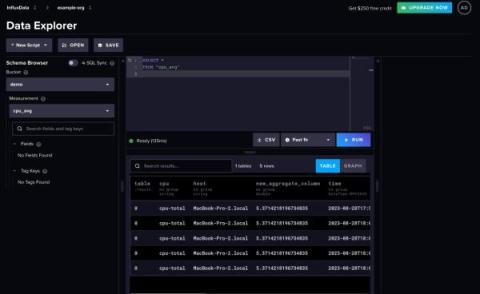
Mage.ai for Tasks with InfluxDB

Any existing InfluxDB user will notice that InfluxDB underwent a transformation with the release of InfluxDB 3.0. InfluxDB v3 provides 45x better write throughput and has 5-25x faster queries compared to previous versions of InfluxDB (see this post for more performance benchmarks). We also deprioritized several features that existed in 2.x to focus on interoperability with existing tools. One of the deprioritized features that existed in InfluxDB v2 is the task engine.

Starting the XLA Journey: A Next-level Perspective for Enhanced Experiences

There’s a profound shift happening today that is taking businesses in a fresh, new direction. Outcomes are at the forefront of IT leaders’ minds, and they’re rightfully becoming a core business accelerator. It’s clear that employee and customer experiences are critical for growing businesses. The trend stems from a shift in priorities.

Learning in public: How to speed up your learning and benefit the OSS community, too

Technical folks in OSS communities often find themselves in permanent learning mode. Technology changes constantly, which means learning new things — whether it’s a new feature in the latest OSS release or an emerging industry best practice — is, for many of us, simply a natural part of our jobs. This is why it’s important to think about how we learn, and improve the skill of learning itself.

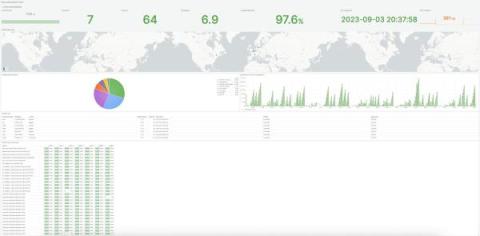
How universities preserve and protect digital assets with Grafana dashboards

Anthony Leroy has been a software engineer at the Libraries of the Université libre de Bruxelles (Belgium) since 2011. He is in charge of the digitization infrastructure and the digital preservation program of the University Libraries. He coordinates the activities of the SAFE distributed preservation network, an international LOCKSS network operated by seven partner universities.