Operations | Monitoring | ITSM | DevOps | Cloud

Announcing the All-new Kamon APM Service Map

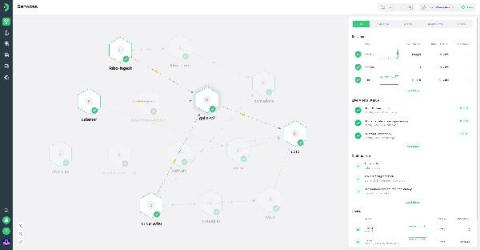
Kamon APM wakes up today with a new home page for all your observability data: the all-new Kamon APM Service Map! The Service Map shows a real-time representation of all your microservices and the dependencies between them, combined with health status and easy access to the most important bits of data from your entire infrastructure.


The Easiest Way to Monitor Ruby: Automatic Instrumentation

Setting up a proper monitoring overview over your application’s performance is a complex task. Normally, you’d first need to figure out what you need to monitor, then instrument your code, and finally make sense of all the data that has been emitted. However, with a few things set in place, and an APM that natively supports Ruby, it’s easier than ever to take this step. In this post, we’ll show you how you can do it too.

Take the 2021 State of DevOps Survey, be part of our 10-year history

Take the 2021 State of DevOps Survey here. This year marks the 10-year anniversary of our industry-defining State of DevOps research. You’d think after 10 years that there wouldn’t be much more to say about DevOps, but practices and technologies continue to evolve, the best keep getting better, and we keep unearthing new topics to research.

Infrastructure Monitoring Tutorial: Getting Started Sending Prometheus Metrics

This Logz.io Infrastructure Monitoring tutorial will cover how to get started with our latest product, our new Prometheus-as-a-Service metrics solution that’s based on Prometheus. Engineers monitor metrics to understand CPU and memory utilization for infrastructure, duration and serverless execution, or for network traffic. For more advanced metrics monitoring operations, teams can send custom metrics to monitor signals like the number of active users.

Why implementing Grafana Enterprise was a bright idea for U.K. energy supplier Utilita

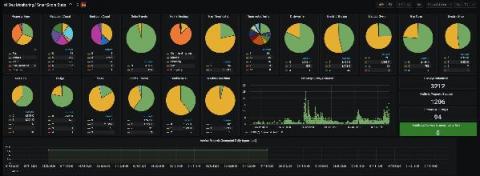
Energy efficiency is a term often used to describe appliances or light bulbs. But when it comes to business, making sure your sales team — and customers — are being efficient with their personal energy is a big key to success. That was a major lesson learned by Utilita, the U.K.’s first and only specialist Smart Pay As You Go Energy supplier.

Honeypods: Applying a Traditional Blue Team Technique to Kubernetes

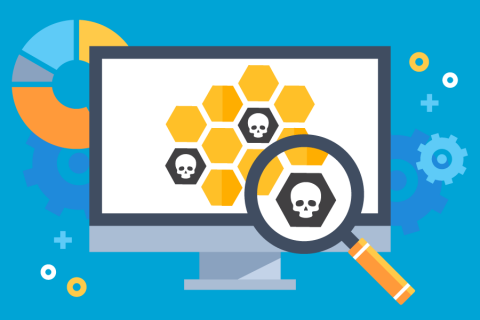
The use of honeypots in an IT network is a well-known technique to detect bad actors within your network and gain insight into what they are doing. By exposing simulated or intentionally vulnerable applications in your network and monitoring for access, they act as a canary to notify the blue team of the intrusion and stall the attacker’s progress from reaching actual sensitive applications and data.

Manually Add a Metadata Source in SentryOne Document

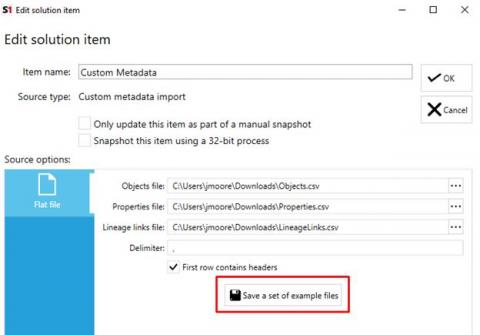
SentryOne Document supports multiple metadata sources, and we plan to expand available providers in the future. But what if you want to add a metadata source that isn’t currently supported? This is where SentryOne Document’s Custom Metadata Import, available in both the Software and Cloud edition, can help. Leveraging this provider, you can manually insert any metadata source—DB2, REST API, or others.

My Build, My Way | JFrog Pipelines Extensions

Once my new projects are almost ready to share with the team and I can build and test them locally, I’ll need a CI automation tool to test and deploy each release. As a Principal Consultant Declarative Systems, I’ve been recommending JFrog Artifactory to clients looking to bullet-proof their deployments since 2016. After considering different CI solutions, we found that JFrog Pipelines has the best integration with Artifactory which made choosing this platform a no-brainer.