Today, we dip our toes into collecting custom metrics with a standalone agent. We’ll be taking our own Kafka brokers and using the StatsD protocol to get the metrics into AppSignal. This post is for those with some experience in using monitoring tools, and who want to take monitoring to every corner of their architecture, or want to add their own metrics to their monitoring setup.
Automating client onboarding can eliminate the tedious task of cloning dashboards, creating group directory structure, setting up reports, and configuring access roles. All of these tasks are prone to human error and to put it mildly, not really fun to do. In this blog, we’ll walk through a PowerShell script to automate some of these tasks.
Among developers, alerts have a bad rep. But outside the coding environment, alerts can signify positive developments. For example, a microwave just alerted me that my burrito is ready to eat. Sentry’s new Metric Alerts is the microwave to the frozen burrito that is your code.
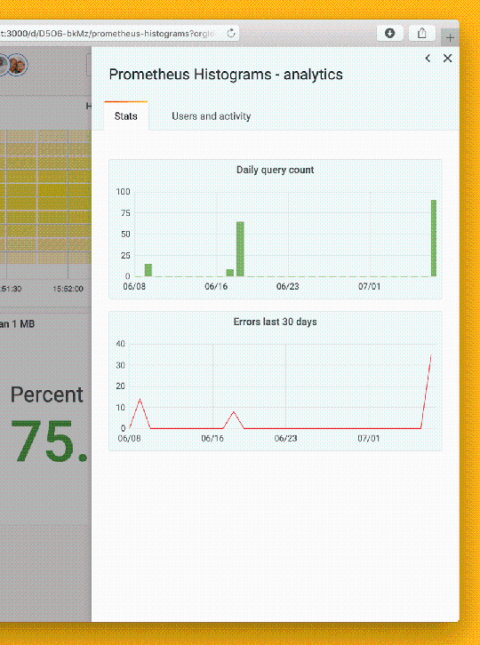
Dashboard sprawl is a real problem whether you’re using Grafana or any other tool. When growing to thousands of users – and as many dashboards – you’ll eventually want more information about how the tool is being used in your organization. After all, dashboards don’t help anyone if they aren’t being used. Managing large installations is one of the areas where Grafana Enterprise improves Grafana, and our launch of usage insights in 7.0 is a key part of that.
A product’s user experience consists of the before, during, and after of a user’s interactions with it, or more precisely, their expectation, satisfaction, and fulfilment. Experience can be influenced by anything from marketing materials, product reviews, interaction with sales, through to cost, installation and onboarding process, product stability, post-sales support, and numerous other factors. So it’s clear that creating a positive experience is a collective responsibility.