Operations | Monitoring | ITSM | DevOps | Cloud

The Safest Place to Run an AI Agent Is On a Cluster That Doesn't Trust It

Every organization running AI agents has already made a hosting decision. Most made it by accident. The sales team switched on the agent built into their CRM. Engineering is piloting a coding agent in a vendor’s cloud. Someone on the data team deployed a LangGraph service to a VM with a database key in an environment variable, and someone else is running an agent framework on a laptop with production credentials in a dotfile. Each of these is a hosting decision.

Google Cloud Functions is now Cloud Run functions: what it is, and what it really costs

Google Cloud Functions is Google's serverless functions product, renamed Cloud Run functions in August 2024 and folded into the Cloud Run platform. You write event-driven code, Google runs it, and you pay per request, per vCPU-second, and per GiB-second after a free tier of 2 million requests a month. The catch: per-invocation billing scales your mistakes exactly as efficiently as it scales your product.

Supabase pricing: plans, free tier limits, and the bills AI is quietly creating

Supabase offers four plans: Free ($0, two projects, 500 MB database each), Pro ($25 per organization per month plus usage), Team ($599 per month, adds SOC 2 and SSO), and Enterprise (custom). The base fee is the floor, not the bill. Compute ($10+ per project), egress ($0.09/GB), storage, and monthly active user charges stack on top, so real production bills run $35 to $200 per month. In June 2026, a database company most CFOs had never heard of raised $500 million at a $10.5 billion valuation.


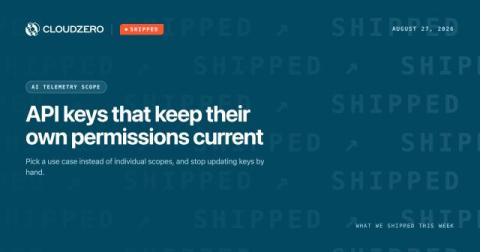
Shipped: API keys that keep their own permissions current

The most common reason to create an API key in CloudZero is to send data, such as AI telemetry or billing exports. Until now, that meant picking individual scopes from a list and hoping you chose the right ones. That works on day one. The problem is day ninety. Permissions on a key have always been a snapshot of the day you created it. A new AI telemetry endpoint ships in October, and a key created in August has no idea it exists.

Why New Devices Sit Stuck in Enrollment

A device ships out, IT pushes the enrollment profile, and then... nothing. Every tech who's supported Apple Business Manager, Android enrollment, or Windows Autopilot has hit this wall at least once — and it's rarely obvious whether the problem is a bad Wi-Fi handshake, a broken ABM sync, or a config profile that silently failed to apply. In this session, we'll walk through exactly where enrollment breaks and how to fix it fast.

The Cyber Resilience Act isn't just for hardware

There's a common assumption that the EU Cyber Resilience Act is a hardware and IoT manufacturer concern. Actually, it affects any SaaS company selling into the EU too, and that's a gap in awareness worth closing. This video covers what the CRA is actually there to do and what it means for your own software supply chain: Securing your customers' supply chain starts with being able to account for your own.

Your SBOM is already out of date

MIT and Apache 2.0 are the easy licenses. Generally, they let you do what you want. Copyleft licenses are the ones that come back to ask questions later, especially once you're generating revenue off the component. This video covers why license compliance gets challenging, and what actually keeps it under control: The goal isn't avoiding open source. It's knowing what's actually in there before a license or a vulnerability surprises you.

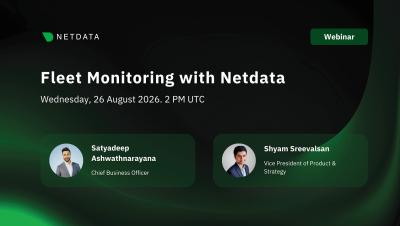
Fleet Monitoring with Netdata

Modern infrastructure doesn't only live in data centers anymore. It's in retail stores, factory floors, vehicles, cell sites, kiosks, and robots, thousands of nodes across hundreds of locations, connected over links you don't control, in places your team can't easily reach. Traditional observability wasn't built for this. Centralizing every metric from every device gets expensive fast, degrades over constrained links, and goes blind exactly when a remote node needs attention most. In this webinar, we'll show how Netdata inverts the model by putting intelligence at the edge.