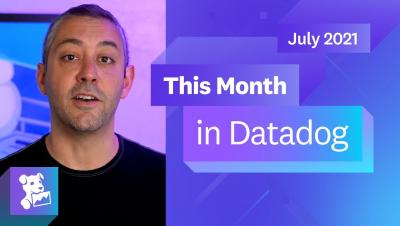
This Month in Datadog: July 2021 (Episode 3)
Datadog is constantly elevating the approach to cloud monitoring and security. This Month in Datadog updates you on our newest product features, announcements, resources, and events.


As a developer, you’re going to be making changes to a codebase. That’s why, as Harold Abelson put it, “Programs must be written for people to read.” If a codebase is not clearly formatted, debugging becomes more difficult than it should be. Though usually overlooked, little changes like reformatting and proper indentation of your code can obviously differentiate a professional developer’s code base from someone just learning.
John Pagliuca, CEO of N-able, has taken issue in the press multiple times with the term digital transformation, preferring the term digital evolution. I agree that evolution is a better term. Digital transformation implies a one-time event; digital evolution acknowledges the ongoing nature of these changes. In short, the market will continue to change. How you adapt dictates whether you come out far ahead or remain with the status quo.
In December 2020, we blogged about security issues in Go’s encoding/xml with critical impact on several Go-based SAML implementations. Coordinating the disclosure around those issues was no small feat; we spent months emailing the Go security team, reviewing code, testing and retesting exploits, coming up with workarounds, implementing a validation library, and finally reaching out to SAML library maintainers and 20 different companies downstream.
It’s no secret that the past year and a half has been challenging for all departments across organizations. One unsung hero? IT. IT is quite literally responsible for keeping the lights on in a work environment that has shifted primarily online.
Cox Automotive is a global company with over 40,000 auto dealer clients across five continents. The company, which houses Kelly Blue Book, Autotrader, and 25 other brands, was built through acquisitions. Its IT Operations team is tasked with bringing them together under the Cox Automotive umbrella and ensuring “a good, consistent experience” for its customers worldwide.