Operations | Monitoring | ITSM | DevOps | Cloud

Introducing Atatus MCP Server: Connect AI Agents to Your Observability Data

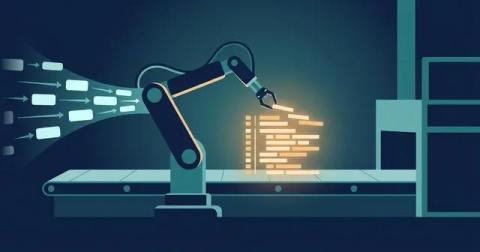
AI coding assistants like Claude, Cursor, Codex, GitHub Copilot have become standard tools in the modern engineering workflow. Developers use them to write code, generate tests, and review pull requests. But when something breaks in production, these assistants hit a wall: they have no access to your actual system state. They can reason about logs, traces, and metrics. They just can't see yours.

AI ROI Dispatches: How a non-engineer solved a $300K problem for under $1K

A year ago, the sentence “I just deployed an app on GitHub” wouldn’t have made sense coming from me. I’m the VP of People at CloudZero; code deployments and I were not close friends. That’s changed. In this AI era, non-engineers are building, and I think that’s a genuinely good thing. But only if it’s tied to something that matters.

Shipped: LiteLLM is probably under-counting your Claude spend

If you run Claude through LiteLLM, some of that spend is probably going uncounted – and you can’t see it, precisely because the data isn’t there. Routing through a gateway is messier than it looks: LiteLLM alone can carry Claude several ways – the OpenAI-compatible endpoint, and the Anthropic pass-through proxy that the native SDK and Claude Code use – and each path describes the same call differently.
Sponsored Post

From Dashboards to Conversational AI: The Evolution of UI in IT Products

The way IT teams interact with technology has changed dramatically over the years. From early text-based interfaces to today's dashboards and now conversational AI, each stage has reshaped how we monitor, diagnose, and understand complex IT environments. But while dashboards gave us visibility, they often led to more questions than answers. In this post, we briefly explore the evolution of UI in IT products and how conversational AI is bridging the gap between data and understanding.

Which Bugs AI Agents Fix Better With Traffic

In the first experiment, I wanted a baseline: if an AI coding agent gets the same production signal a human would get, can it fix bugs in a codebase it has never seen? Yes, but only when I gave it better context. With only an alert, the agent passed 51% of the runtime tests. When I added captured traffic, the actual request and response for the failing call, it climbed to 77%. This post is the second pass.

What if AI could resolve your IT tickets before they're ever created?

Watch how agentic AI automates password resets, VPN troubleshooting, access requests, software installations, and other repetitive IT service desk tasks without human intervention. Resolve helps enterprises reduce ticket volume, lower ITSM costs, improve employee experience, and move toward Zero Ticket IT. If you're researching AI for IT support, ServiceNow automation, ITSM automation, autonomous IT operations, or AI service desk solutions, this Short shows what's possible.

How Agentic AI Enables Autonomous Threat Response at Machine Speed

Why do 40% of alerts received by security teams today go completely uninvestigated? It’s not due to a lack of concern but instead caused by shortening attack windows and compounded by overwhelming tech sprawl. Today’s security teams are operating in a threat landscape defined by escalating attacks, tighter budgets and mounting alert fatigue. Organizations process an average of 960 security alerts per day, and large enterprises handle more than 3,000 daily alerts across roughly 30 tools.