Operations | Monitoring | ITSM | DevOps | Cloud

The latest News and Information on DevOps, CI/CD, Automation and related technologies.

Feeling zen, finding DORA, and the policy police

We’ve had a bumper month here at incident.io HQ. We’ve welcomed 3 new joiners, celebrated two 1 year incident.io anniversaries (congrats Lisa and Lawrence!), released a whole load of exciting new features and (for those of you wondering what’s been causing the recent heatwave) we’ve redesigned our website and it is on fire 🔥 😎 Here’s a round-up of some of this month's highlights…
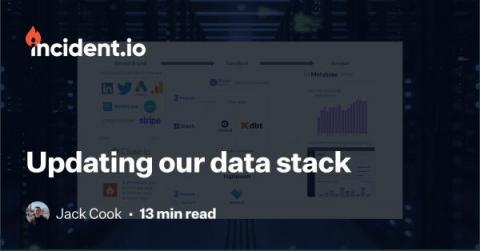

Updating our data stack

It’s been over 6 months since Lawrence’s excellent blog post on our data stack here at incident.io, and we thought it was about time for an update. This post runs through the tweaks we’ve made to our setup over the past 2 months and challenges we’ve found as we’ve scaled from a company of 10 people to 30, now with a 2 person data team (soon to be 3 - we’re hiring)!

20+ SysAdmin Tools You Can't Live Without

Being a system administrator is a high-level and demanding profession. Yes, we’re talking long hours (not counting overtime!), unforeseen events requiring attention, and so much troubleshooting. But not everything about SysAdmin life has to be more challenging than it needs to be. That’s why we put together this list of must-have SysAdmin tools so you can optimize your workflow and focus on critical tasks.

How to Explain Zero Trust to Your Tech Leadership: Gartner Report

Does it seem like everyone’s talking about Zero Trust? Maybe you know everything there is to know about Zero Trust, especially Zero Trust for container security. But if your Zero Trust initiatives are being met with brick walls or blank stares, maybe you need some help from Gartner®. And they’ve got just the thing to help you explain the value of Zero Trust to your leadership; It’s called Quick Answer: How to Explain Zero Trust to Technology Executives.

Terraform vs Pulumi

Terraform and Pulumi are both Infrastructure as Code (IaC) tools. They allow you to manage, provision, and configure your infrastructure using code, which makes it easy to automate your infrastructure deployments and manage them in a version control system. Terraform is an open source tool developed by Hashicorp. It’s popular among developers because it’s easy to use and has a wide range of community-developed plugins and integrations.

Find the root cause faster with Datadog and Zebrium

When troubleshooting an incident, DevOps teams often get bogged down searching for errors and unexpected events in an ever-increasing volume of logs. The painstaking nature of this work can result in teams struggling to resolve issues before new incidents appear, potentially leading to an incident backlog, longer MTTR, and a degraded end-user experience.

PagerDuty Service Standards helps organizations better configure services at scale

Service ownership, a DevOps best practice, is a method that many companies are pivoting towards. The benefits of service ownership are varied and include boons such as bringing development teams much closer to their customers, the business, and the value being delivered. The “build it, own it model” has tangible effects on customer experience, as developers are incentivized to innovate and drive customer-facing features that delight.

Easy Kubernetes metrics and cluster management with K9s, Kubectx, and Kubens

Efficiently retrieving Kubernetes metrics is the beginning of cluster performance optimization. Cluster metrics such as logs and resources descriptions are crucial as they map the health of your cluster. There’s a Kubernetes tool called K9s that lets you access your Kubernetes cluster metrics swiftly using short keys. K9s prioritizes aesthetics and performance as it displays its contents and functions in an aesthetically pleasing UI.

How To Put Cloud Nimble to Work to Segment Dev/Test from Production

In every workplace, most work gets done at the most cluttered desks. Yet the business also requires an orderly front office to run efficiently. It’s much the same with your DevOps pipeline environments, as the rough and tumble process of innovating code must ultimately produce cleanly released applications. Continuous integration means that developers perform many builds each day, but few of those builds will advance to production repositories.