Operations | Monitoring | ITSM | DevOps | Cloud

The latest News and Information on Incident Management, On-Call, Incident Response and related technologies.

From checklist to playbook: Creating structure for your processes

Playbooks aim to be a super-powered checklist for repetitive tasks. Before you can get to the “super-powered checklist,” though, you need to identify the process that you’ll use to build your first playbook and create a structured process as a Playbook checklist. Let’s go on that journey today.

Enterprise Alert 9.4 Update introduces Remote Actions for hybrid scenarios and proxy support for MS Teams

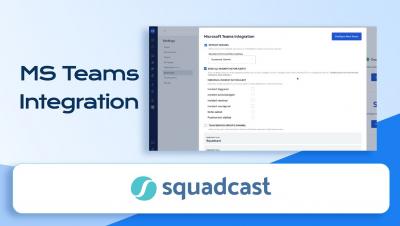
We have released another update for Enterprise Alert 9 (version 9.4) which enhances the cloud bridge and MS Teams integrations. This will help you to setup scenarios where you wish to active your Enterprise Alert remote actions from with the Signl4 app as well as allowing for using a proxy to configure the MS Teams integration. Read all details in this article.

Webinar: AIOps in healthcare

Healthcare around the world is constantly evolving. The amount of data being generated daily from every appointment and interaction, no matter how small or large, needs to be processed and analyzed in order to improve patient outcomes. The data must be accurate, stored, accessible and secure. Without a core infrastructure of smart IT, any outcomes are extremely challenging to generate, and data must be available in seconds for doctors to make life-saving decisions. The bottom line?

Sponsored Post

Network Performance Monitoring Is Only Step One

Incident response aims to identify, limit, and mitigate an incident. Whether such an occurrence is a security breach or a hardware failure, formulating and continuously strengthening an incident response strategy has become vital for all businesses in the digital age. Your incident response strategy consists of the processes your organization takes to handle incidents-such as network outages and service-impacting bugs-and the steps taken to mitigate incidents.

Key takeaways from MIM Expo 2022 for incident management professionals

The MIM Expo (Major Incident Management) always delivers, and this year’s recent gathering was no exception. At this annual event, we always get a unique opportunity to hear about what’s top of mind with major incidents and SRE professionals from all the world.

7 ways teams are using incident.io's Decision Flows

One of my favourite features in incident.io is Decision Flows. With it, you can create a series of questions which eventually lead to a decision based on what you’ve answered. You can pull up this flow during an incident and it’ll guide you through the questions. It’s like having an experienced on-caller calmly guide you through what to do when a crisis hits. This is complementary to incident.io’s Workflows feature.

FireHydrant is now more powerful across the entire incident lifecycle

FireHydrant has partnered with incredible companies to transform incident response inside their organizations, but our goal has always been to support the full incident lifecycle. That’s because we know that investing in good incident management can kickstart your reliability efforts when it includes both a streamlined incident response process that helps you recover faster and the ability to learn from incidents and then feed those insights back into your system.

3 Ways You Might Have an NOC Process Hangover

NOC, or network operation center, processes have been set in stone for decades. But it’s time for some of these processes to evolve. Digital transformation and the cloud era have led to the rise of DevOps, and with it, service ownership. Service ownership means that developers take responsibility for supporting the software they deliver at every stage of the life cycle. This brings development teams closer to their customers, the business, and the value they deliver.

3 Ways You Might Have a NOC Process Hangover

NOC, or network operation center, processes have been set in stone for decades. But it’s time for some of these processes to evolve. Digital transformation and the cloud era have led to the rise of DevOps, and with it, service ownership. Service ownership means that developers take responsibility for supporting the software they deliver at every stage of the life cycle. This brings development teams closer to their customers, the business, and the value they deliver.