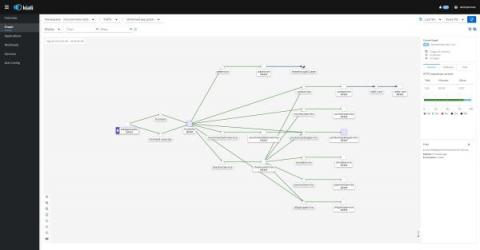
Since its introduction in 2014 to the world, Kubernetes has been helping usher in the next generation of distributed workloads. As workloads started to be containerized, so did the need to manage the containers, thus the inception of container orchestrators. There have been a few container orchestrators out there before Kubernetes such as Docker Swarm and Apache Mesos. Though as a feature developer, Kubernetes can certainly feel like an 800-pound gorilla in the room.
Back in 2019, David Simmons created an awesome blog introducing LoRaWAN devices and The Things Network. He also showed you how easy it was to connect The Things Network V2 to InfluxDB. Since then, a few things have changed and I thought it was time to revisit the Things Network with a new project.
Ah, good question! TL;DR: store the start time of the span, and then create the span on the new page. Usually, you want to start a span, do some work, and then end the span. The whole span gets sent to your OpenTelemetry collector (and thence to Honeycomb) when you end it. But when a page load happens, that span object is lost. Honeycomb never hears about it becausespan.end()wasn’t called. How can we deal with this? Create the span only on the new page, where you can end it. But!
Customer-centered business practices have become a major focal point in IT innovation. The advent of massive communication has brought forth a big challenge, however: how does one provide a top-notch customer experience when there are so many factors to account for? The market’s answer to this conundrum is monitoring software.
In 2021 we saw corporate investments in the cloud spike, although business leaders are still struggling with cloud projects in terms of education, guidance, and talent. In 2022, our view is that cloud investment will remain strong, with more business leaders taking ownership of their cloud journey.
Choosing a JavaScript framework for a new project can be a daunting task. There’s always a new one getting hype from the community, while the established players still have a lot to offer. So you need to do your homework and make sure the framework you choose is the right one for your specific requirements. Popularity alone is never the best indicator, but a review of the most widely-used options should help you decide which way to go.
Datadog Notebooks enable your teams to create and manage key reports and documentation as they build out, monitor, and maintain their infrastructure. Notebooks can include both text and graphs of any telemetry data you have collected in Datadog, and they support collaborative editing so that multiple team members can edit and leave comments simultaneously.