Operations | Monitoring | ITSM | DevOps | Cloud

Create a Cloud Migration Strategy with IT Infrastructure Monitoring

The rapid pivot towards a remote workforce is forcing organizations to adopt a cloud-first approach faster than ever. We recently surveyed 500 IT decision-makers around the globe to ascertain their views on IT automation, cloud migration, and business continuity in the face of unexpected crises. The survey found that 87% of IT professionals agree that the current COVID-19 pandemic will cause organizations to accelerate their migration to the cloud.

Get AWS credits for your startup with AWS Activate

If you’ve ever launched a startup, you know how hard it is to find funding. It’s a huge grind just to get from conception to execution without even worrying about profitability yet. But to attract an investor, you have to show consistent revenue growth to prove they will eventually see a return. Many, many startups fail before they reach a Series A. And the industry with the highest startup failure rate? The information industry, at 63%.

Introduction to instrumenting applications with Prometheus

As a developer, getting metrics from your application onto a Prometheus graph can seem daunting. We’ll look at analyzing your service to find the most useful places to add metrics, how to add that instrumentation, getting it exposed and scraped, and then basic queries to use those metrics on graphs. Check out another article of mine for general reference on instrumenting, this one on Prometheus metrics, or this comparison on instrumentation alternatives.

Heroku Continuous Integration & Deployment with Docker [Hands-On Tutorial]

In this tutorial, we will be using Heroku to deploy our Node.js application through CircleCI using Docker. We will set up Heroku Continuous Integration and Deployment (CI/CD) pipelines using Git as a single source of truth. Containerization allows developers to create and deploy applications faster with a wide range of other benefits like increased security, efficiency, agility to integrate with DevOps pipelines, portability, and scalability.

Is Your Service Desk Too Complicated to Use?

It’s an exchange that happens almost every day in every business office: Employee peeks over the divider and asks her coworker, “Hey, how do I connect this to Bluetooth?” Maybe it’s a frozen laptop, or a glitch in the browser, or an issue connecting to VPN. And maybe it’s a drive-by at the coffee machine or Slack message to a “tech-savvy” coworker.

Overcoming Continuous Delivery Challenges with P2P Distribution

DevOps adoption is happening by the largest organizations across the globe. At JFrog swampUP 2020, Gal Marder, VP of DevOps Acceleration and Shimi Bandiel, solution architect of the DevOps Acceleration team at JFrog, spoke about the new challenges encountered by many of these large organizations practicing DevOps when it comes to Continuous Delivery in their CI/CD process.

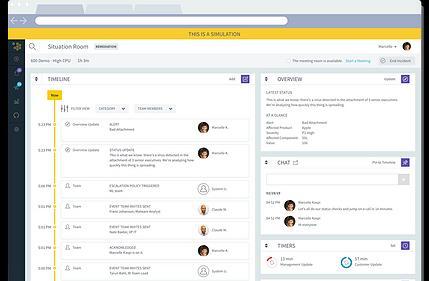
Rein in Your Incidents: Incidents and Alerts Foundations

Solving incidents is hard. Depending on your current situation, you may also be losing a lot of time figuring out what notifications constitute an incident. This results in more and more lost time as every notification must be triaged as a potential incident before you can proceed to move to resolve or disregard (as a non-incident). All this may sound very cumbersome, but the fastest way to improve is to learn and define what incidents are. And you’re in luck!

HoneyByte: Get a Taste for Sampling

Honeycomb’s event-based pricing model is pretty simple: we only care about how many events you send. For teams running workloads at scale, the question becomes: are all of my events worth keeping? How can you reduce overall event volume while maintaining fidelity? This HoneyByte is all about sampling strategies you can use to lower costs without sacrificing the value of your data.