Testing is still the most arduous, painful, and expensive task within a DevOps practice, regardless of framework or approach. Why? Because the current approaches to testing and development are not focused on production. Production-Driven Development (PDD), allows for rapid iteration without sacrificing stability or confidence. Following PDD, a small team or single developer can launch an application in weeks that used to take multiple teams months or a year.
At Nexthink, we are committed to supporting our customers as they accelerate sustainable IT improvements in the global fight against climate change. Through our Sustainable IT solution, we aim to provides vital insights to help IT and EUC professionals embed sustainability into the core of their IT strategy. The great news is that doing this leads directly to operational efficiency and cost savings. We hope every company keeps this in mind as they accelerate their sustainable IT efforts.
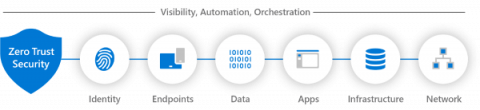
Zero trust isn’t an approach that can be delivered by buying a single product that claims to provide it. Instead, it is an approach that needs to be understood and implemented in complementary ways across an organization’s IT systems. We recently hosted a webinar titled Applying Zero Trust to Data Centre Networks to provide guidance on how organizations can use zero trust to enhance the security of their IT systems. The webinar details are below, after a summary of the topics covered.
Increases in attack surface size lead to increased cybersecurity risk. Thus, logically, decreases in attack surface size lead to decreased cybersecurity risk. While some attack surface management solutions offer remediation capabilities that aid in this effort, remediation is reactive. As with all things related to security and risk management, being proactive is preferred. The good news is that ASM solutions aren't the only weapons security teams have in the attack surface fight.
Resistance to change is always present, especially if you think the processes you have in place are efficient and effective. Many organizations feel this way about their software management procedures until they have a security breach or incident and are left wondering where they went wrong. The reality is that most patch management programs are built on assumptions and recommendations, rather than facts about actively exploited vulnerabilities. Risk-based patch management is the answer to this issue.
There has been growing interest in the capabilities of generative AI since the release of tools like ChatGPT, Google Bard, Amazon Large Language Models and Microsoft Bing. With the hype comes concerns about privacy, PII, security and, even more importantly, accuracy. And rightly so. Organizations are treading cautiously with their acceptance of generative AI tools, despite seeing them as a game changer.
As more and more of the public sector enact large-scale digital transformation initiatives, government organizations must find new ways to manage massive amounts of data securely while maintaining compliance. With new mandates from the Biden administration to enhance cybersecurity best practices in both the private and public sectors, organizations like the Department of Defense (DoD) face new challenges to their data management and communication practices.