Operations | Monitoring | ITSM | DevOps | Cloud

How To Unlock Granular Kubernetes Cost Metrics

It can be a challenge to measure costs within a SaaS company. While a business with physical inventory can count the number of items sitting on the shelf and the money needed to create, store, and ship those items, operating within the cloud means SaaS companies have to measure their costs through a layer of abstraction. The number of users a given product supports and the resources needed to keep that product up and running could change by the minute.

The Definitive ITSM Implementation Checklist [+Free Template]

Implementing a new service desk, however beneficial it may be, is fraught with challenges. In fact, if you google “Reasons why ITSM implementations fail,” there’s no dearth of articles and peer-reviewed research papers. But the truth is that the process is easier than it looks like – if you have an ITSM implementation roadmap and this helpful ITSM implementation checklist we’re about to provide you with.

StackState Observability Platform v5.1 - Context Is King

Context is king, in particular if you are troubleshooting your stack. Having all the right information from your observability platform to understand the behavior of your stack is fundamental for solving problems. With our StackState Observability Platform v5.1 release, StackState takes a big step forward to provide you even more information that is crucial for making decisions and for finding the root cause of an issue faster.

SaaS Based Asset Management: 5 Main Reasons why Asset Managers choose it

In today’s fiercely competitive world, all businesses strive to boost productivity while maintaining minimal overhead expenses and strong margins. In order to consciously, effectively, and affordably scale up and down with demand to supply the storage and processing capacity they need on a global scale, cloud architecture and Software-as-a-Service (SaaS) solutions have evolved.

What are the Best Practices to Improve the Incident Management Process?

DevOps and IT Operation teams employ the incident management process to respond to an unanticipated event or service outage and return the service to operational status. In the ITIL framework, it is a mechanism that links end-users and the IT department for more effective incident response. A robust incident management system in any company will allow the employee to raise a ticket detailing the issue he/she is facing.

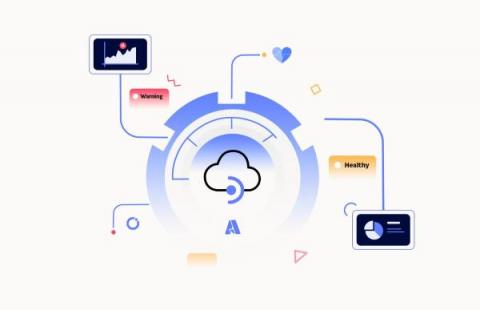
Getting started with Azure API management health check

Due to the increasing influence of businesses on APIs, the volume of APIs on which they rely, and the administrative challenges that APIs pose, API administration has gained popularity. For the most part, other apps don’t have the exact requirements or construction and management processes as APIs. Vital documentation, higher security standards, extensive testing, frequent versioning, and excellent reliability are all requirements for using APIs properly.

Data Normalization Explained: How To Normalize Data

Virtually every business utilizes some form of data collection, no matter how big or small. While large-scale enterprises have more established methods for collecting, storing and analyzing data, smaller companies and start-ups are also beginning to understand the value of data collection and analysis in order to: This is especially true in the age of Big Data and democratized data — where we have more data-driven insights available to us than ever.

Monitoring RPA Deployments With Splunk

When you first hear “Robotic Process Automation” (RPA) you might immediately think of a manufacturing line with a series of physical robots each doing their part to build something. RPA is SO much more than that! The “bot” in this sense is an AI powered piece of software that can interface with any system you run today just as a human would.

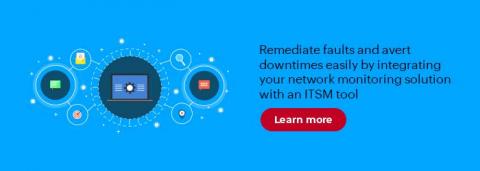
Minimizing network downtime by integrating network monitoring solutions with ITSM tools

Being a network admin of an enterprise network, you know better than anyone how disastrous network downtimes might be. The cost of downtime study conducted by Gartner in 2014 found that network downtime costs $5,600 per minute on an average, but this number can range from $2,300 to $9,000 per minute. With organizations moving towards sophisticated networks built on hybrid infrastructures, network downtimes are becoming more frequent and costly.