Operations | Monitoring | ITSM | DevOps | Cloud

The Impact of Internet of Things (IoT) in the Retail Industry

Internet Of Things has always played a significant role in the retail industry, stocking and warehousing. And its value is projected to rise from USD 14.5 billion in 2020 to USD 35.5 billion by 2025, at a CAGR of 19.6% The term Internet of Things was coined by Kevin Ashton when he was faced with a challenge in logistics and supply chain management while he co-founded the MIT Auto-CAD centre.


ServiceNow partners with Intel, Volteo to provide EaaS, Edge to Service Solutions

Data is at the heart of every business today. But if we don’t understand the data or if the data isn’t accessible, it doesn’t do us much good. More important than the data itself is having the right data in the hands of the right people who can execute at the right time. This need has given rise to edge computing, which helps businesses glean insights from data by processing it as close to the source as possible.

Logging Best Practices: Knowing What to Log

First of all, don’t ask this! Instead of asking what to log, we should start by asking “what questions do we want to answer?” Then, we can determine which data needs to be logged in order to best answer these questions. Once a question comes up, we can answer it using only the data and knowledge that we have on hand. In emergent situations such as an unforeseen system failure, we cannot change the system to log new data to answer questions about the current state of the system.

Deploy ASP.NET Core applications to Azure App Service

The ASP.NET Core framework provides cross-platform support for web development, giving you greater control over how you build and deploy your.NET applications. With the ability to run.NET applications on more platforms, you need to ensure that you have visibility into application performance, regardless of where your applications are hosted. In previous posts, we looked at instrumenting and monitoring a.NET application deployed via Docker and AWS Fargate.

New feature: Templates for Incident Management

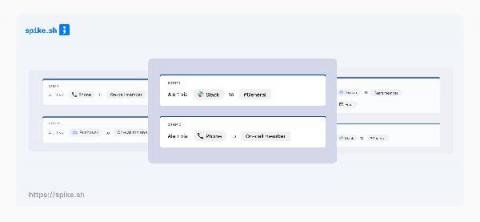
At Spike.sh , we are obsessed with making incident management more accessible to dev teams everywhere. With this goal in mind, we are always looking for ways to reduce the friction while setting up the Spike.sh platform. When we saw customers asking our advice for creating effective on-call schedules and escalations, we knew we had to do more than just good documentation - we needed a way to share best practices with our customers in the product itself.

Grafana Tempo 1.1 released: New hedged requests reduce latency by 45%

Grafana Tempo 1.1 has been released, and like our major version suggests, there are no breaking changes. If you’d like, please check out the release notes . But if you find that release notes can sometimes be difficult to decode, fret not! All the highlights are below.

Proactive Microsoft 365 & Microsoft Teams Service Delivery Monitoring for Enterprise IT & MSPs

Providing an effective service – especially in a world with constantly evolving needs – goes beyond standard operating hours. Imagine if a bank only kept your investments secure while they were ‘open’ during their hours of standard operation? Issues can arise at any time and having effective service delivery monitoring and support for enterprise’s IT teams and managed service providers is critical.

The "Perfect" Log Management Solution Is Invisible

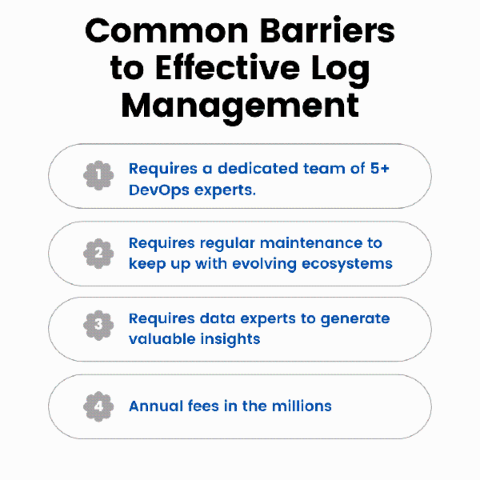
It sounds like a wild claim, considering that billion dollar companies like Splunk, Datadog, New Relic, and Solarwinds are consistently making national headlines, for both good and bad reasons. Observability leaders are anything but invisible, so how can the perfect solution be different? Are they that far off?

Deploying your Gradle Build Cache Node using GCP

This tutorial is a follow-up to TurboCharging your Android Gradle builds using build cache . The key focus of this post is the remote build cache, a build speed acceleration technology that can be implemented for both local and CI builds. This is a technology worth knowing about because: Gradle provides a build cache node available as a Docker image. You can host this image in a number of ways.