The Kemp Flowmon Roadmap for 2021
Your feedback, current trends, and a good chunk of innovation are what shapes the current and future face of our solution. Read on to find out what is coming in 2021.


Your feedback, current trends, and a good chunk of innovation are what shapes the current and future face of our solution. Read on to find out what is coming in 2021.
A big part of ensuring the availability of your applications is establishing and monitoring service-level metrics—something that our Site Reliability Engineering (SRE) team does every day here at Google Cloud. The end goal of our SRE principles is to improve services and in turn the user experience. The concept of SRE starts with the idea that metrics should be closely tied to business objectives. In addition to business-level SLAs, we also use SLOs and SLIs in SRE planning and practice.
“Well it works on my machine.” – The age-old catchphrase that developers used when the tester found an intermittent defect, today it’s often used when people run a Google Lighthouse test on their machine and it ends up showing wildly different results to what is being reported by the team.
What do Google’s DevOps Research and Assessment (DORA) and Rollbar have to do with each other? DORA identified four key metrics to measure DevOps performance and identified four levels of DevOps performance from Low to Elite. One way for a team to become an Elite DevOps performer is by focusing on Continuous Code Improvement.
If you want to improve your customer operations, your attention must turn to your NPS score. The Net Promoter Score for your organization should never be overlooked. This can provide you with vital insights into how your services are perceived by customers. Those actively attempting to improve their NPS scores should focus on improving customer operations. Those running customer-centric businesses recognize the undeniable importance of operating around their needs.
Deep specialization of IT administrators is a luxury only the largest organizations can typically afford. Smaller organizations rely on IT administrators with a more generalist skill set because they are—by necessity—responsible for a wide array of different technologies, and there simply isn’t time to specialize in the intricacies for any one of them. Yet modern IT is intricate.
You’re probably familiar with the many benefits of licensing software using a SaaS (Software-as-a-Service) model. The most frequently touted benefit is that you pay only for what you use when you use it. Additionally, you don’t have to worry about upgrading, or server maintenance, or security. That’s all taken care of. However, even using a SaaS model, you still need to monitor and manage costs, which can be a challenge if you are working with several suppliers.
Gartner’s latest “Quick Answer” report discusses how clinical communication and collaboration (CC&C) systems can enhance pandemic-related provider and patient engagement. Modern healthcare delivery organizations (HDO) invest in CC&C solutions to simplify communication among care teams consisting of physicians, nurses and critical support personnel. The OnPage team is pleased to be recognized as a vendor in Gartner’s latest CC&C publication.
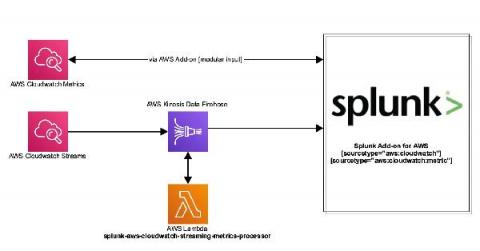
Amazon Web Services (AWS) recently announced the launch of CloudWatch Metric Streams. Cloudwatch Streams can stream metrics from a number of different AWS resources using Amazon Kinesis Data Firehose to target destinations. The new service is different from the current architecture. Instead of polling, metrics are delivered via an Amazon Kinesis Data Firehose stream. This is a highly scalable and far more efficient way to retrieve AWS service metrics.