Operations | Monitoring | ITSM | DevOps | Cloud

11 Useful Project Management Tools for Web Development

Web designers are putting their time, effort, and creativity into creating a site that appeals to users, and engages, and holds their attention. According to one episode of the Project Management Podcast, it’ll be easier for designers to turn those ideas and concepts into a tangible web design using the right tools. But with so many tools out there in the market, picking the right one can be difficult. So, what will a designer do?
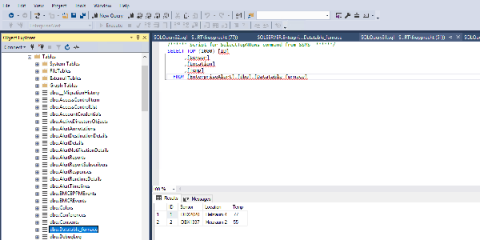

Alerts out of your database (SQL, Powershell, REST API)

Whether it be on the administrative side of the house or in a production environment, the digital world is not slowing down. In fact, it is increasing by the second. Data is collected from a thousand different sources and often stored in the same number of places. Automating the collection, analyzing and augmentation of this data can be quite a cumbersome task and very time-consuming. Not to mention the loss in revenue when this is not done.

ServiceNow global survey shows how COVID-19 is changing work

Today ServiceNow released The Work Survey, a comprehensive global view on how COVID-19 is changing work and the opportunities ahead for a wave of digital innovation in how people work and businesses operate. Executives and employees surveyed in 11 countries across multiple industries agree: technology enabled them to pivot to new ways working faster than thought possible, and digital transformation will accelerate innovation.

Watchdog surfaces root cause insights and Kubernetes anomalies

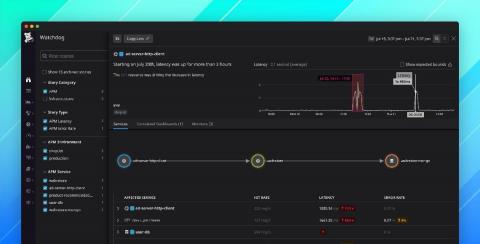
Since 2018, Watchdog has provided automatic anomaly detection to notify you of performance issues in your applications. Earlier this year, we introduced Watchdog for Infra, enhancing Watchdog to also monitor your infrastructure. We’re pleased to announce the latest enhancements to Watchdog, which now provides more visibility and greater context around the full scope of each application issue.

Introducing RancherD: A Simpler Tool for Deploying Rancher

As part of Rancher 2.5, we are excited to introduce a new, simpler way to install Rancher called RancherD. RancherD is a single binary you can launch on a host to bring up a Kubernetes cluster bundled with a deployment of Rancher itself. This means you just have one thing to manage: RancherD. Configuration and upgrading are no longer two-step processes where you first have to deal with the underlying Kubernetes cluster and then deal with the Rancher deployment.

Rancher 2.5 Delivers Enhanced Full Lifecycle Management of EKS Clusters

Amazon EKS is the most popular managed Kubernetes solution. DevOps teams can quickly spin up clusters in the cloud and get started with Kubernetes in a few clicks. As organizations embrace Kubernetes in the cloud, the challenge becomes managing clusters across multiple regions or accounts. At that point, organizations struggle to visualize all of their clusters.

Rancher 2.5 Delivers On "Computing Everywhere" Strategy

Despite the lockdown restrictions of the last six months, I'm delighted to announce that we've released Rancher 2.5 on schedule today. This latest release represents another major milestone of Rancher's "Computing Everywhere" strategy by delivering management capabilities that match the extraordinary popularity of Amazon EKS and our lightweight Kubernetes distribution, K3s.

Rancher 2.5 Embraces GitOps at Scale with Rancher Continuous Delivery

The ability of Kubernetes to easily deploy and manage containerized software has given organizations tremendous capabilities in their cloud services, with clusters multiplying into the hundreds or thousands and extending out to the edge for any number of purposes. But its growing popularity has also led to challenges in managing complexity in an environment that is conducive to cluster sprawl.

Now GA: Cortex blocks storage for running Prometheus at scale with reduced operational complexity

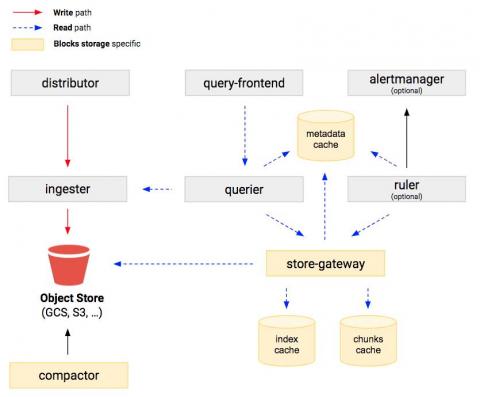
We’ve just launched Cortex 1.4.0, one of the most significant releases of 2020. The big headline: The new blocks storage engine has exited the experimental phase and is now marked as Generally Available. Blocks storage aims to reduce the operational complexity and costs of running a Cortex cluster at scale. In particular, it removes the dependency from a NoSQL database to store series indexes.