Operations | Monitoring | ITSM | DevOps | Cloud

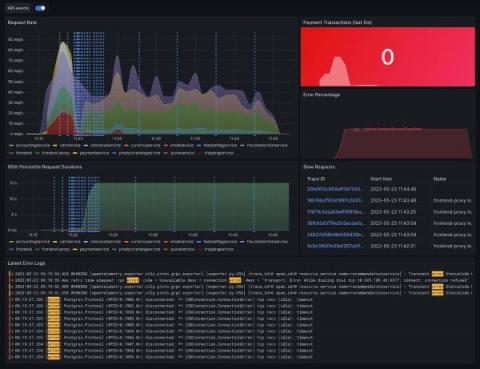
How to fix performance issues using k6 and the Grafana LGTM Stack

The Grafana Labs ecosystem is built on a range of different projects that incorporate logs, metrics, traces across load testing, and Kubernetes monitoring. I’ll assume you know all of that data (and more!) can be visualized in Grafana. What made my observability dream become reality, though, is how these systems can work together to help you effectively debug performance issues and operate your system with more confidence.
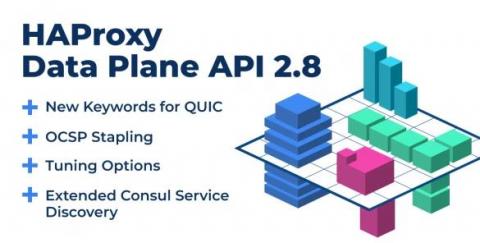

Announcing HAProxy Data Plane API 2.8

We are proud to announce that we have released HAProxy Data Plane API 2.8, available on our GitHub page. This release follows the recent HAProxy 2.8 release and incorporates its changes, along with some improvements and changes specific to the API. HAProxy Data Plane API 2.8 adds new keywords focused on QUIC, OCSP stapling, and tuning options that allow you to customize your HAProxy process using the HTTP REST API programmatically.

ServiceNow named a Leader in process-centric AIOps platforms

I’m excited to announce The Forrester Wave™: Process-Centric AI For IT Operations (AIOps), Q2 2023 named ServiceNow as a Leader among the top vendors in the crowded AIOps market.1 Our journey to this position underscores our leadership in predictive AIOps. We’ve continuously harnessed the immense potential of AI to enhance operational efficiencies, drive productivity, and revolutionize user experiences.

Best Cloud Monitoring Tools (Open Source & More)

Cloud monitoring tools are utilized to gather an extensive range of metrics and logs from cloud resources and services. Some commonly monitored metrics include CPU utilization, memory usage, network traffic, disk I/O, latency, and response time. By monitoring these metrics, among others, it becomes possible to gain insights into resource utilization, identify performance bottlenecks, and ensure that the infrastructure operates according to expectations.

10 Best Security Tools for eCommerce

The eCommerce businesses have expanded in leaps and bounds during the COVID-19 and post-COVID situations and continue to show the same trend. People across the globe continue to shop online for their needs of clothing and apparel, home needs of groceries, home appliances, home décor, health and fitness products, sports needs, automotive accessories, jewelry, and much more. Today’s modern-day customers prefer to purchase online many of their needs with a single click through their mobiles.

Observability: How to Boost Gaming Performance in 5 Ways

For a game to provide the best user experience, certain elements come into play. These factors can be hardware components in the user’s computer, like the CPU and GPU, operating system settings, or specific game settings. In fact, if there’s misalignment between these components and a game’s intensity, performance issues can crop up. The most common performance issues in gaming include frame rate drops, input lag, stuttering, rendering issues and network latency.

What is Network Throughput: From Bytes to Blazing Speed

As network admins and IT specialists, you bear the crucial responsibility of optimizing network performance, ensuring the seamless flow of information. Network throughput lies at the heart of this endeavour, serving as a key performance metric that measures the amount of data transmitted within a given timeframe. Consider network throughput as the pulse of your network—the indicator of its vitality and efficiency.

SOAP vs REST-Which is Best for Integrating with N-central?

As part of my work as a Head Nerd, I have the pleasure of meeting with MSPs from all over the world. About a month ago, I was speaking with four technicians from a global MSP based out of California. They were very technically savvy, had a deep understanding of PowerShell, and had a huge emphasis on automation in their business.

The ultimate PaaS guide: build and deploy your applications faster

Building applications and managing infrastructure at the same time is a complex task. It involves managing multiple software and hardware components, plus an evolving ecosystem of dependencies and external tools. There’s also the need to keep up with changing technologies while coordinating different teams and delivering solutions to meet business goals.