When you send an email or load a website, you probably never think about how the data gets from your computer to the server that needs to process it. But something does have to decide how the data will move across the vast expanse of the Internet – and, in particular, which of the virtually infinite number of potential routes your data will take as it moves from your device to a server and back again.
In a recent meetup I hosted alongside Kunal Kushwaha, we discussed Cilium, an eBPF-powered open-source cloud-native networking solution that offers security, observability, scalability, and superior performance. Throughout this blog I will explore how the increased usage of Kubernetes has led to the need for advanced networking, security, and observability solutions. This will allow us to take a closer look at how Cilium can benefit Kubernetes users.
Firewall systems are critical for protecting your network and devices from unauthorized traffic. There are several types of firewalls that you can deploy for your environment via hardware, software, or the cloud—and they all typically fall under one of two categories: network-based or host-based. Network-based firewalls monitor and filter traffic to and from your network, whereas host-based firewalls manage traffic to and from a specific host, such as a laptop.
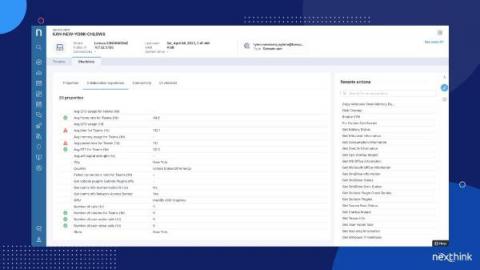
Companies using Zoom and Microsoft Teams as their real-time employee collaboration solution have access from their vendor(s) to the call and session data telemetry gathered by their solutions via a vendor-supplied API. But is this enough for effective management of collaboration tool performance in the enterprise digital workplace?
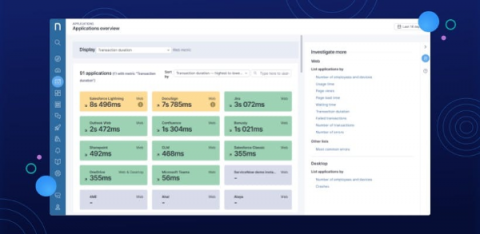
We have seen in the Series 1 of How To Improve the Performance of SaaS Applications using Nexthink on how Nexthink Application Experience could be leveraged to proactively monitor Page load times of Web Applications to improve user experience and application performance for increased business value.
Across industries and geographies, businesses rely heavily on Systems Applications and Products (SAP) systems. These powerful and versatile systems streamline operations and manage critical data spanning areas like finance, human resources, and supply chain. However, the real-time monitoring of these systems, with an in-depth understanding of performance metrics and quick anomaly detection, is paramount for smooth operations and business continuity. It's here that our unique offering steps in.
In the data business, we often refer to the series of steps or processes used to collect, transform, and analyze data as “pipelines.” As a data scientist, I find this analogy fitting, as my concerns around data closely mirror those most people have with water: Where is it coming from? What’s in it? How can we optimize its quality, quantity, and pressure for its intended use? And, crucially, is it leaking anywhere?
In today's business landscape, the role of the helpdesk is more important than ever. Whether you're dealing with customer inquiries, technical support requests, or other types of issues, having an efficient and effective helpdesk ticketing system is essential to providing timely and high-quality support. However, simply having a ticketing system in place is not enough; it is equally important to track and analyze key metrics to ensure that your helpdesk is performing optimally.