The latest News and Information on Monitoring for Websites, Applications, APIs, Infrastructure, and other technologies.
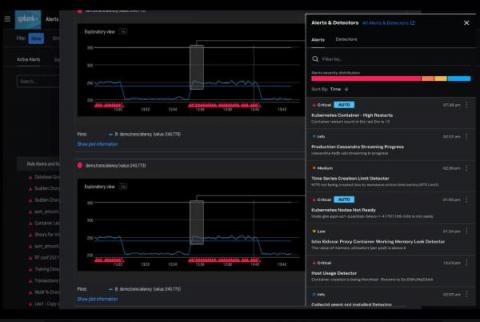
This year at.conf21, we announced exciting new features in Splunk Infrastructure Monitoring, our real-time streaming metrics-based monitoring platform. Our innovations help SRE and cloud operations teams detect and resolve performance issues even more quickly and efficiently while maintaining enterprise-grade security and compliance posture. In this roundup blog, we cover, in detail, all the product features we unveiled at.conf21.
The cloud and Electric Vehicles (EVs) have a lot in common. Both are modern, fast, and agile. Both are also in great demand. Every street seems to have an EV parked somewhere. It’s the same with the cloud, which is fast becoming the platform of choice to power enterprise applications. Whether it is public, private, or hybrid, the cloud offers flexibility, security, and low total cost of ownership.
Observability vs monitoring, what is the difference? Monitoring is the what to observability’s why. Here we dig into the differences.
We all know that the history data is important in monitoring. But this history data becomes obsolete over time and those records become garbage which would only fill up space. So it is important to remove obsolete history records to free up space. We call this process housekeeping. This needs to be performed periodically to cleanup the history records whenever they exceed their maximum age and become obsolete.
Due to the growing usage of online methods for almost everything globally, technology has become a part of our daily lives. Most people around the world are using mobile apps and websites. Most of the companies are already adopting brand-new tech stacks faster. They are trying hard to implement all the features and make their system robust and powerful. But it is not easy to make an application error-free. It is impossible to track all the issues, reproduce them, and fix them before shipping code.