The latest News and Information on Monitoring for Websites, Applications, APIs, Infrastructure, and other technologies.
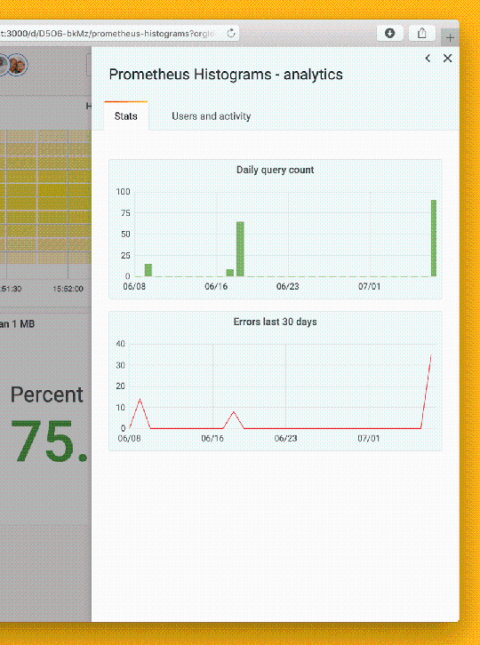
Dashboard sprawl is a real problem whether you’re using Grafana or any other tool. When growing to thousands of users – and as many dashboards – you’ll eventually want more information about how the tool is being used in your organization. After all, dashboards don’t help anyone if they aren’t being used. Managing large installations is one of the areas where Grafana Enterprise improves Grafana, and our launch of usage insights in 7.0 is a key part of that.
At Lumigo, we recently ran into some issues with a service we built on top of our Nodejs AWS Lambda handler. These issues were the result of lambda execution leaks from within our serverless code. In this article, I’ll explain about node.js lambda execution leaks and how to avoid them.
This is the story of how I used Honeycomb to troubleshoot redis/redis-rb#924 and discovered a surprising workaround.
This post is the second in our Kubernetes observability tutorial series, where we explore how you can monitor all aspects of your applications running in Kubernetes, including: We’ll cover using Elastic Observability to ingest and analyze container metrics in Kibana using the Metrics app and out-of-the-box dashboards.
A while ago, we covered the invocation (trigger) methods supported by Lambda and the integrations available with the AWS catalog. Now we’re launching a series of articles to correlate these integration possibilities with common serverless architectural patterns (covered by this literature review). In Part I, we will cover the Orchestration & Aggregation category. Subscribe to our newsletter and stay tuned for the next parts of the series.
Digital Experience firm analyzes employee sentiment on the IT service they’re receiving IT experience management software company Nexthink is revving its efforts to help companies measure and improve how employees feel about their IT environments with a new release of its platform.
Over the past few months, many organizations have transitioned their employees from mostly onsite to fully remote work environments. Now we’re entering into a phase where roughly 30% of the workforce will soon head back to the office, while the rest continue to work from home.