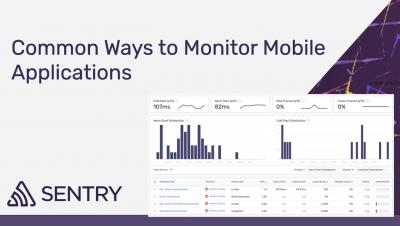
Common Ways to Monitor Mobile Applications
Philipp Hofmann (Software Engineer @Sentry) shares common ways developers can monitor their mobile applications.


Software Asset Management (SAM) involves a complex set of challenges, requiring high levels of support and engagement blending the right mix of people, processes, and tools. In the face of this complexity, in organizations that lack the required sponsorship or dedicated SAM functions, managing software assets can disproportionately fall into the asset management tools themselves.
Catchpoint recently announced the Digital Experience Score. This score is the first all-encompassing metric to represent all essential drivers of digital end-user experience. With pressure on IT teams ever growing to fix the IT issues of a remote workforce, we wanted to make troubleshooting as straightforward as possible. The score provides IT teams tasked with improving employee experience with a quantifiable measurement of what each employee is experiencing digitally.
For retailers, uptime is money and issues can cost thousands of dollars per minute. With infrastructure comprising complex services such as payment gateways, inventory, and mobile applications, maturing digital operations is vital for ensuring services are always on and customers get the best experience.
Two years ago, I wrote a long retrospective of observability for its third anniversary. It includes a history of instrumentation and telemetry, a detailed explanation of the technical spec, and why the whole “three pillars” thing is nonsense. At the time, it’s what was needed to steer conversations away from silly rabbit holes about data types and back to what matters: how we understand our systems.
Within the French Ministry of Agriculture and Food (the Ministry), our team of architects in the Methods, Support and Quality office (BMSQ) evaluate and supply software solutions to resolve issues encountered by project teams that affect various disciplines. As data specialists, one area we’ve been involved in includes reconfiguring the traceability of activities for the commercial fishing industry.