Operations | Monitoring | ITSM | DevOps | Cloud

Further Tips on our Database Migration to the Azure Cloud Session at MS Ignite 2021

I was really stoked to deliver a session at Microsoft Ignite with my long-time friend and fellow Head Geek™, Tom LaRock, on the topic of migrating an on-premises SQL Server database to the Azure cloud. You can watch the session on demand here. In addition, Microsoft MVP and SQL Server expert David Klee provides an excellent recap on each of the major elements Tom and I discussed.


What's New with Ivanti Device and Application Control 5.3

What’s New in Ivanti Device & Application Control 5.3 Nearly every company in the world incorporates a Mac endpoint into the organization. Without a device control solution to manage these stations we see a real possibility for data leakage risk. This loss happens mainly because of insider threats. Ivanti Device and Application Control has historically performed well protecting our customers against these types of threats, but the Mac endpoints can still represent a risk.

What's New: Updates to Event Intelligence, Compliance and Reporting, and More!

We’re excited to announce a new set of updates and enhancements to the PagerDuty platform! These updates are designed to help organizations accelerate cloud migration, provide premium levels of customer service, streamline collaboration and communication, and deliver a seamless customer experience in the moments that matter most.

Validating Elastic Common Schema (ECS) fields using Elastic Security detection rules

The Elastic Common Schema (ECS) provides an open, consistent model for structuring your data in the Elastic Stack. By normalizing data to a single common model, you can uniformly examine your data using interactive search, visualizations, and automated analysis. Elastic provides hundreds of integrations that are ECS-compliant out of the box, but ECS also allows you to normalize custom data sources. Normalizing a custom source can be an iterative and sometimes time-intensive process.

Pingdom Powered Status Page

Pingdom is one of the most used website monitoring tools, with almost 15 years in the business. It excels at providing simple and reliable synthetics as well as real user monitoring. This monitoring tool provides a simple public status page, but as you might have noticed it’s quite limited. It only serves as a display of your uptime and response time history, not much more than that.

Shifting Complexities in DevOps

In this episode of ShipTalk, Jim Shilts, Developer Advocate at Shipa and the Founder and President of North American DevOps Group (NADOG), chats with Ravi Lachhman, Evangelist at Harness on the “Shifting Complexities in DevOps.” Jim has been working on solving engineering efficiency problems for over 20 years, working at firms such as Build Forge and Electric Cloud, pre-dating the inception of Hudson/Jenkins.

Improve Business KPIs with Splunk APM Business Workflows

One of the biggest challenges that DevOps teams face is how to connect their efforts with the priorities of business leaders. In conversations we’ve had, developers and SREs discussed how they need to show business and engineering leaders that they are investing their time solving the right problems, and how solving these problems lead to overall better business outcomes.

Sumo Logic extends its APM to browser

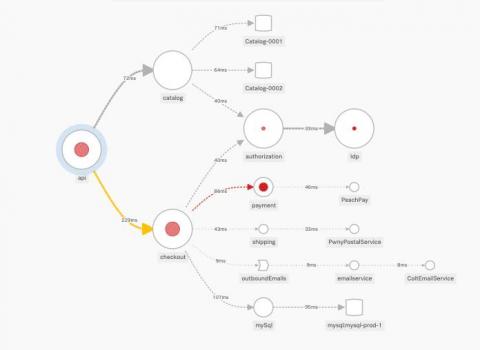
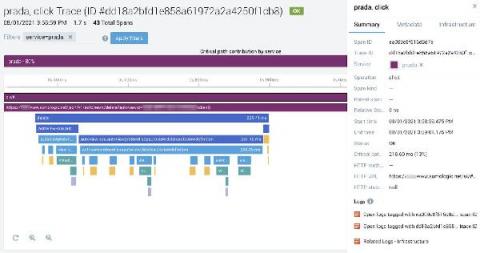
Over a year ago we decided to invest heavily in Application Observability, understanding the modern observability platform must unite logs, metrics, and traces in one analytics layer to better serve reliability use cases. We have also advocated a modern trend to acquire tracing data via open source industry standards like OpenTelemetry without vendor lock-in.

Enough! 4 Work From Home Solutions to Heal IT's Pain

Let’s face it: when it comes to managing a work-from-home setup, IT has a lot of problems they don’t know how to solve. It’s not for lack of effort – there just don’t seem to be many practical solutions out there that can alleviate their new remote work-induced headaches. It was tough enough getting everyone up and running in home offices. Now, IT is all but drowning in tickets (a majority of tech leaders have reported ticketing increases up to 50%).