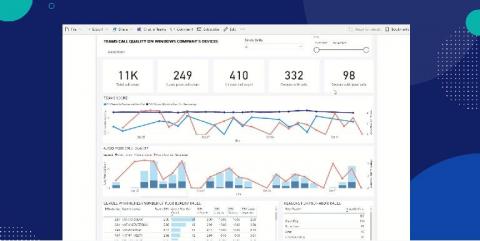
From digital transformation to infrastructure optimization, business analytics and data visualization allow IT stakeholders to make sense of complex situations. You can’t improve what you can’t measure, right? More and more, we see IT organizations combining different sources of information to uncover unique insight, allowing them to detect areas of improvement, find new opportunities, optimize processes and gain that competitive edge.
As a world leader in professional services, Deloitte knows how to innovate and meet client requirements to a high standard. The professional services network uses ServiceNow IT Business Management and ServiceNow digital workflows to operate efficiently and deliver on client projects. Once Deloitte had achieved initial success with query management, the team began examining opportunities to use ServiceNow to digitise workflows across the organisation.
We’re thrilled to share the news that Splunk has been named a Leader in The Forrester Wave™: Security Analytics Platforms, Q4 2020. It’s an honor to be named a Leader by Forrester. We view it as an affirmation of our commitment to customer success and a reflection of our ability to understand their needs. Through close collaboration with our customers, we have developed innovative solutions to protect their data hosted in on-premises, hybrid or multi-cloud environments.
Securing access to business resources has always been of high priority for admins and IT teams. In the wake of the pandemic, workforces are more distributed than ever before, and 76 percent of global office workers state that they would like to work from home even when the pandemic is over.
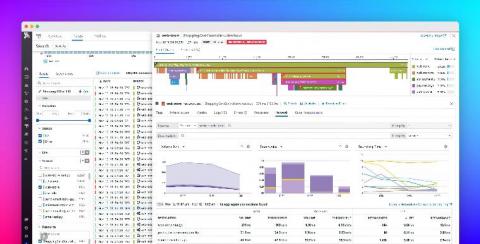
With the advanced containerization that has become the norm in the modern cloud, your infrastructure is likely more distributed, and thus more exposed to networking issues, than ever before. When troubleshooting application performance issues, this can make it difficult to link the symptoms you observe through monitoring the “golden signals” (requests, latency, and errors) on individual endpoints in your application to their underlying root causes.
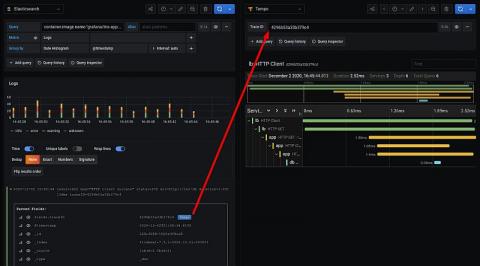
Grafana Tempo, the recently announced distributed tracing backend, relies on integrations with other data sources for trace discovery. Tempo’s job is to store massive amounts of traces, place them in object storage, and retrieve them by ID. Logs and other data sources allow users to quickly and more powerfully jump directly to traces than ever before. Previously we investigated discovering traces with Loki and exemplars.
Performance monitoring is great because it lets you see whether your application is fast or slow, and which parts need speeding up. For Node developers, those “parts” are most often endpoints handling incoming requests. Since the introduction of our performance monitoring offering in July 2020, Node devs have been able to use the Sentry SDK, @sentry/node, to measure the total time it takes to process each request, but we made some significant improvements since then.
Kubernetes namespaces enable you to organize cluster objects, such as applications, devices and variables. Once you define namespaces, you can use this classification to filter, group and manage objects. You can use the same namespaces in duplicated environments and apply policies to specific clusters segments. Kubernetes namespaces are also important for defining roles and ensuring proper access configuration. If you're monitoring Kubernetes, you should try out MetricFire.